

 中文简体
中文简体 русский
Industrial Heavy Duty Saw Machine Buying Guide: Key Specs, Costs, and Automation
 2026.09.15
 Industry News
Picture a forging workshop halfway through a run of 42CrMo bars. The heavy duty saw machine is the first gate in the process: every billet it cuts becomes the raw material for heating, upsetting, and die forging. If the saw cuts out of square, the press operator catches it later. If blade life collapses, the cost lands on every finished part. A heavy duty saw machine is not a peripheral tool; it is the production asset that sets the tolerance, the cycle time, and the consumable cost for everything downstream. Choose it by peak spindle speed alone, and you are choosing with the least informative number on the datasheet.
What actually matters in a heavy duty saw machine purchase comes down to four factors: the largest cross-section you need to cut, the squareness and length tolerance you can accept, the cost per cut over years of blade consumption, and the level of automation your production line can use. Get those four right, and the machine will still earn its floor space in ten years.
Content
What Makes a Saw Machine Heavy Duty?
"Heavy duty" appears in every catalog, but in metal cutting it usually means three things. First, a frame that resists torsion, welded steel or heavily ribbed castings, so the blade path stays stable when the tooth load spikes. Second, a drive and feed system sized for continuous running rather than occasional cuts, with bigger motors, heavier gearboxes, and hydraulic or servo clamping that holds the workpiece against the cutting force. Third, blade guiding that keeps the cut straight at full engagement, whether that is a circular saw blade stabilizer or carbide guide inserts on a band saw.
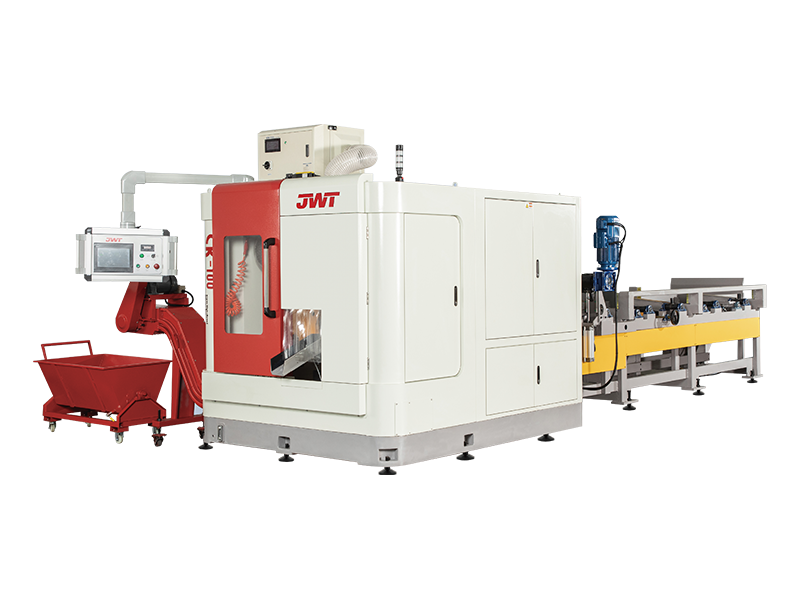
On a circular saw machine, heavy-duty construction also means the spindle and gear train can hold cutting speed while the blade is fully buried in the material. This is the condition that makes general-purpose machines stall or vibrate, leaving chatter marks on the cut face. Jingweite's heavy-duty high-speed circular saw machine tool is designed around that problem: heavy clamping cylinders, a rigid spindle, and a servo-controlled feed that advances the blade at a constant rate. The result is a square face and repeatable cycle times on bar stock that would punish a lighter machine.
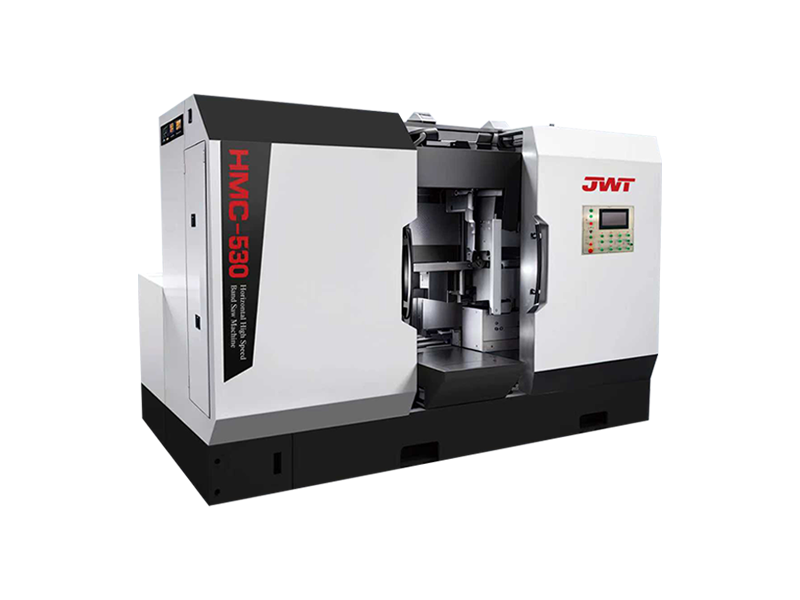 Jingweite Heavy Duty High Speed Stainless Steel Circular Saw MachineThis machine tool is built for stainless steel sawing with improved rigidity and longer blade life. It suits forging, bearing, and auto parts operations that demand square faces and repeatable cycles on tough bar stock.View Product →
Three Machine Types, Three Different Compromises
When a shop says it needs a heavy duty saw machine, it usually compares three technologies: circular saws, band saws, and power hacksaws. Roughly speaking, circular saws cut fastest and leave the cleanest face; band saws make the thinnest kerf and handle the largest sections; hacksaws are the simplest and cheapest but slow. This table summarizes the trade-offs.
| Machine Type | Practical Capacity | Cut Tolerance | Kerf Width | Blade Cost | Best Suited For |
|---|---|---|---|---|---|
| Heavy-duty circular saw | Round bar up to 350-500 mm | Tight; clean square face | 2-5 mm | Higher with carbide tips | Batch billet cutting in forging and bearing plants |
| Horizontal band saw | Solid sections from 500 mm and up | Good; slight drift possible | 1-2 mm | Lower per cut | Large solid billets, structural steel, mixed sections |
| Power hacksaw | Up to about 300 mm | Acceptable; slower cycle | 3-6 mm | Lowest | Low-volume maintenance and job shops |
For most buyers, capacity alone does not decide the purchase. If the production plan calls for two shifts of continuous cutting, a heavy duty saw machine with automatic bar feed and adequate coolant delivery will outperform a larger machine that needs constant operator attention. In high-volume billet cutting for forging or bearing steels, the choice usually narrows to a heavy-duty circular saw for speed and a horizontal band saw for the occasional large section. Jingweite's HMC series horizontal high-speed band saw machine was built for that second role: heavy sections that do not justify the faster but more expensive circular blade.
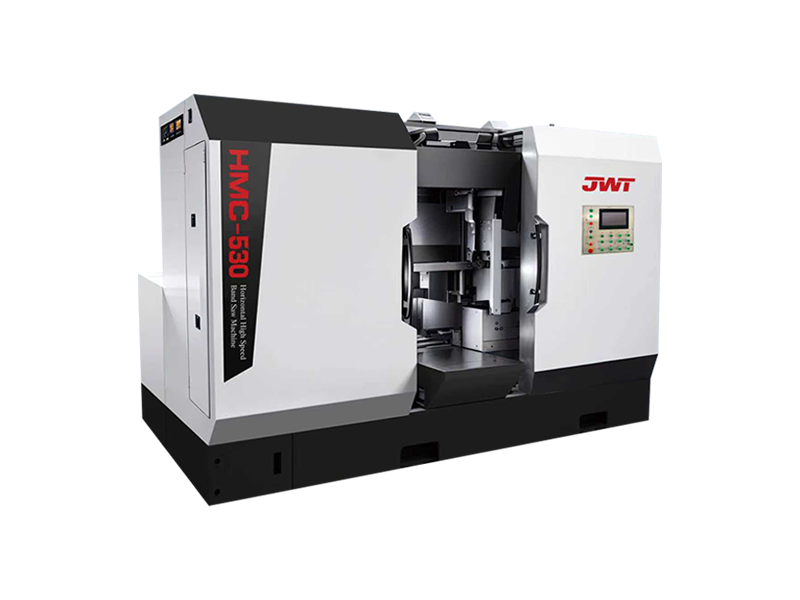 Jingweite HMC Series Horizontal High Speed Band Saw MachineDesigned for heavy sections in carbon, bearing, and spring steels as well as difficult-to-cut alloys. It complements faster circular saws by handling large billets with reliable horizontal band sawing performance.View Product →
What Changes in Forging and Bearing Production
Forging billet preparation starts with purchased bar stock in grades such as 42CrMo, 40Cr, or bearing steel GCr15. The saw must convert that bar into billets with a clean square face and no torn burr that would upset the die or accelerate wear on the forging press. In bearing production, the same demand applies to tube and bar for rings and rollers; squareness and end-face quality carry directly into the next turning and grinding operations.
Two specifications matter more than the rest in these environments. The first is clamp design. A heavy duty saw machine has to grip the bar close to the cut line; otherwise the blade pushes the material sideways, and the last billet off every bar comes out short or tapered. The second is cut-length repeatability, typically +/-0.1 to +/-0.5 mm depending on whether the feed uses a ball screw, rack-and-pinion, or servo-hydraulic system. If both are right, the next machine in line, often a chamfering machine, gets an easy job producing clean concentric chamfers.
The Blade Is the Real Cost Center
Over the life of a heavy duty saw machine, the blade dominates variable cost. Every tooth on a circular saw blade is a cutting edge; tooth geometry, rake angle, and carbide grade determine how many cuts you get before the blade needs indexing or resharpening. Fit the wrong blade, and the machine will compensate at first, then slowly drift out of tolerance, and the operator will blame the saw when the real problem started with the blade specification.
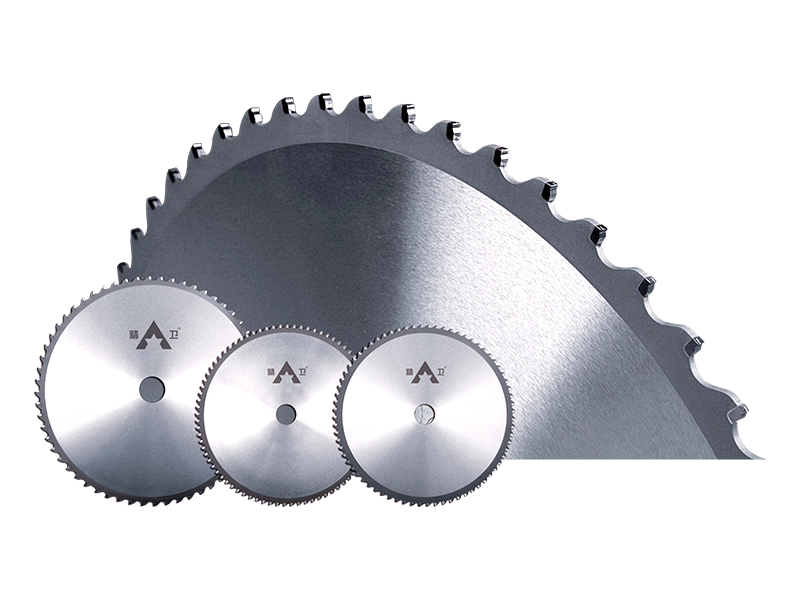
Matching the blade to the machine is easier when both come from the same engineering team. JWT series machine tool special saw blades are designed for the spindle speed and feed range of Jingweite's saw machines, with blade-body tension and guide clearance set at the factory for that specific cutting cell. That removes a common failure mode: mounting a blade meant for a slower machine on a high-speed saw, then wondering why the cut burns and the carbide tips chip.
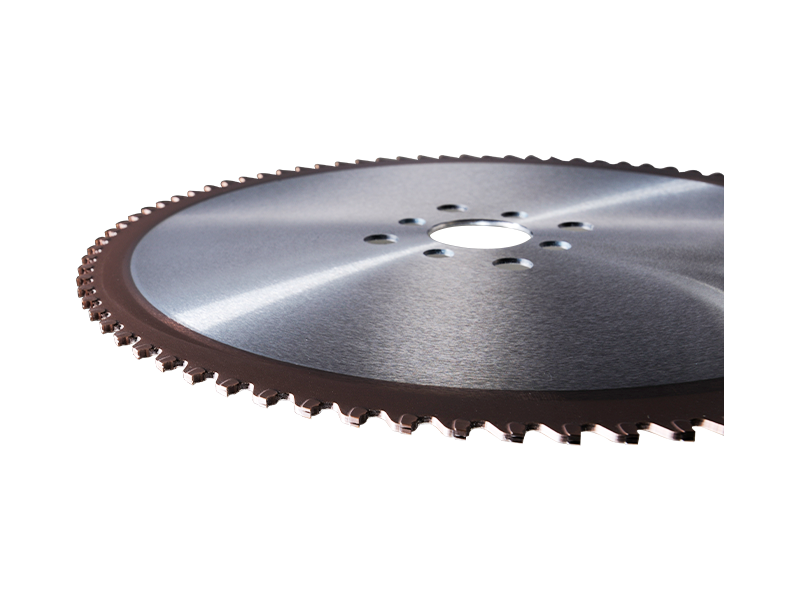 Jingweite JWT Series Machine Tool Special Saw BladesThese blades are engineered to match Jingweite saw machine spindle speeds and feed ranges, helping prevent burning and chipping. Available in multiple center hole diameters to fit various cutting cell configurations.View Product →
Coolant delivery deserves equal attention. A heavy duty saw machine cutting low-alloy steel without enough coolant flow will burn a blade in hours. Check that the nozzles direct fluid to both sides of the cut and that the pump volume is sufficient to flush chips out of the gullets.
Automation: Start with the Saw, Plan for the Line
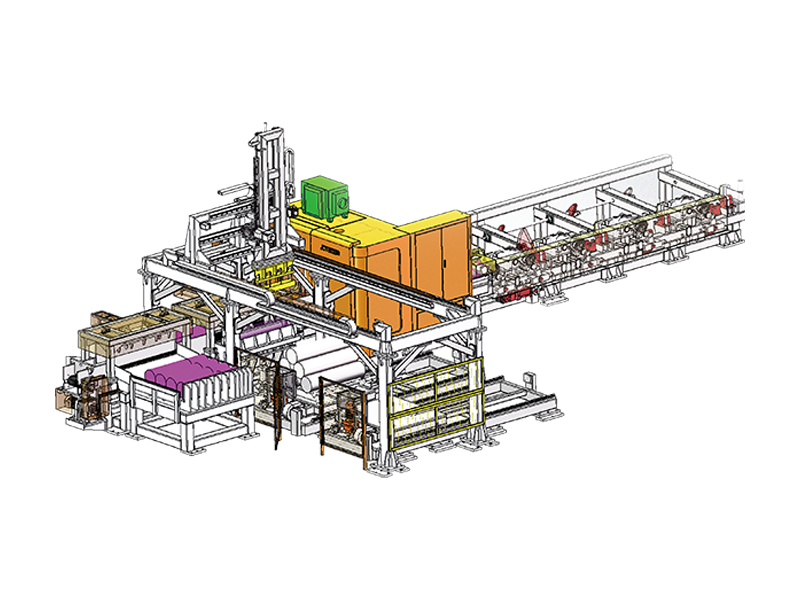
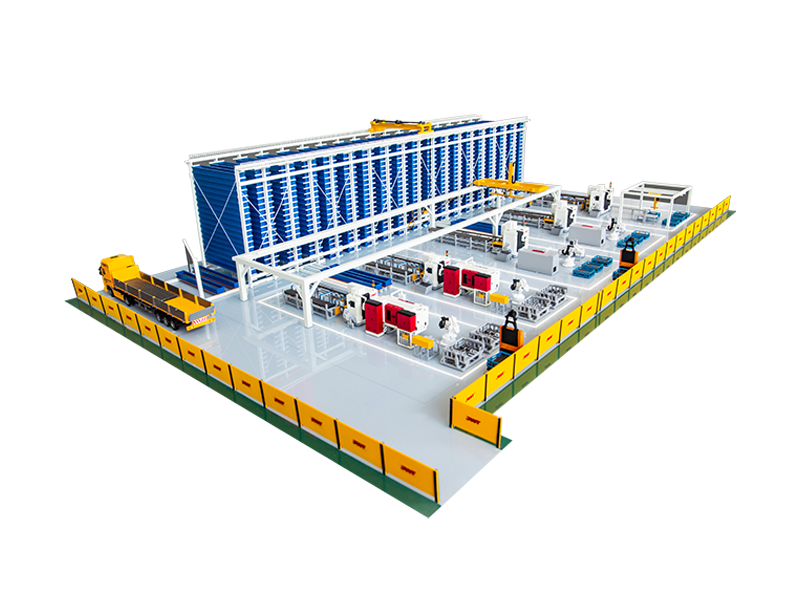
No supplier can tell you how much automation you need; your part mix and labor cost decide that. But the direction in forging and bearing shops is consistent. Raw material arrives as long bars, and the saw is the natural point to add magazine loading, length measurement, part sorting, and weighing. A heavy duty saw machine with an automatic bar feeder can run multiple bars unattended, and its output feeds directly into chamfering, turning, or the forging press.
Shops that buy a single saw and later ask for a fully integrated blanking line usually pay more for retrofits than they would have paid for an automation-ready machine at the start. So it is worth asking three questions at the quotation stage:
- Can this machine accept a bar loader later without a major redesign?
- Does the control system communicate with a line PLC or MES?
- What happens to cut-length accuracy when the bar diameter varies from lot to lot?
If the answers are vague, the machine will become the bottleneck in an automation plan you have not written yet.
What to Verify Before You Sign
Specification sheets are written to impress; a purchasing decision needs evidence. Before you sign, use a short checklist:
- Run a cutting test on your actual material grade and record squareness and length deviation on the first and last billet of a bar.
- Ask for spindle or blade runout values and the instruments used to measure them.
- Confirm the availability of spare parts for hydraulic cartridges, guide liners, and clamping jaws.
- Request a reference from a factory running shifts similar to yours, not a demonstration site that cuts once per month.
Jingweite publishes a detailed heavy duty saw machine buying guide that covers exactly these checks, and its track record is useful context: 21 invention patents, 72 utility patents, and a regular cadence of new machine launches since 2020, from the SK and CK ultra-high-speed circular saws to the HMC band saw. That does not guarantee the right machine for your line, but it reduces the risk of choosing a supplier who will not be around when the spare-part call comes.
The right heavy duty saw machine is the one that keeps your line moving at the lowest cost per good billet. Define the material range, the tolerance, the blade budget, and the automation level before you compare brands. If you are evaluating equipment from this manufacturer, start with the product documentation and news archive at JWT-Tools. Then go watch a real cutting test on your own material. A saw is a simple machine in principle; it is the details of rigidity, clamping, and blade pairing that decide whether it pays for itself or becomes a maintenance story.

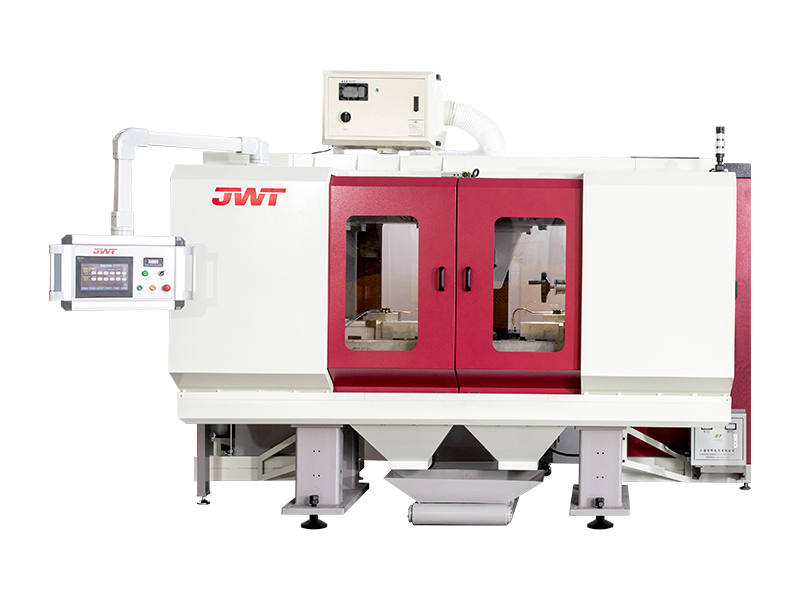
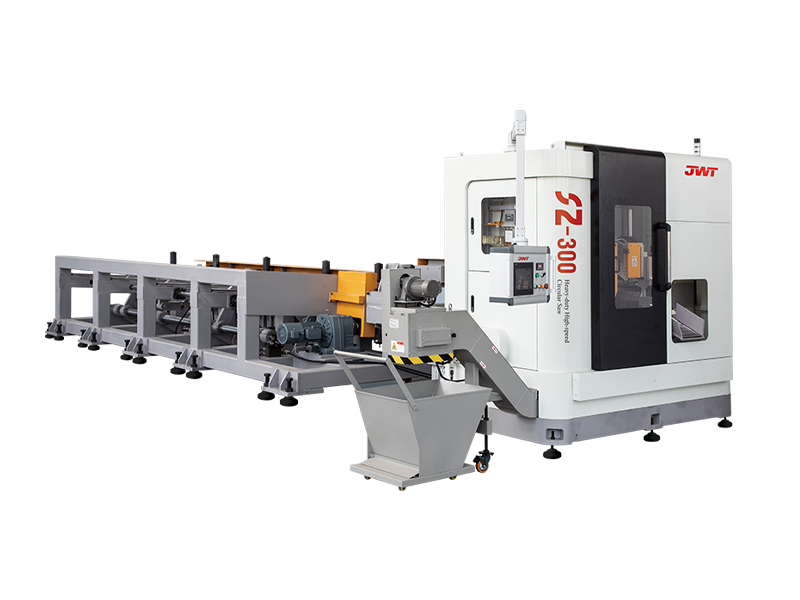
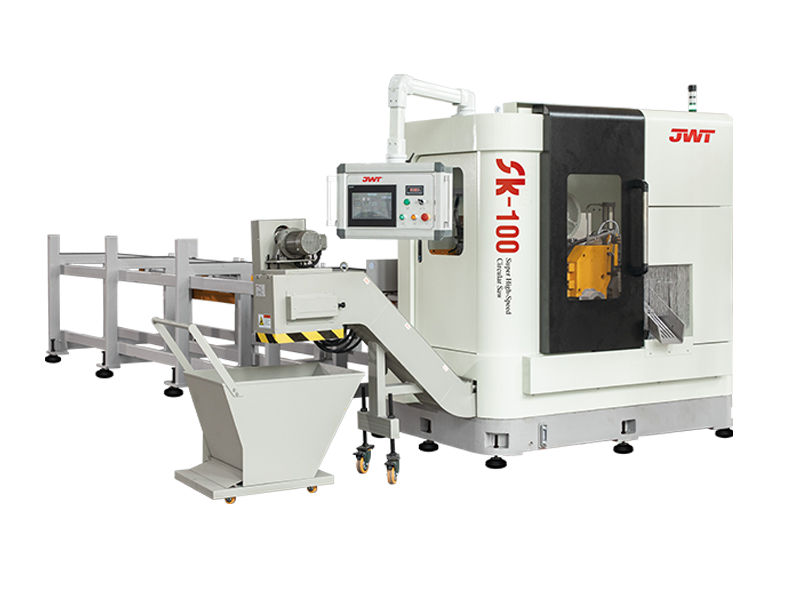

If you are interested in our Circular Saw Machine or production line, please consult us
CONTACT DETAILS
Zhejiang Jingweite Machine Tool Co.,Ltd.
- No.661 Jiyi Road, Wanghai Hi-tech Industrial Park, Haiyan, Jiaxing City, Zhejiang Province
- TEL:+86-0573-86035661
- E-Mail: [email protected]
Products
Quick link
Mobile terminal
