

 中文简体
中文简体 русский
How to Choose a Circular Saw Machine Tool: A Practical Guide for Metal Cutting
 2026.09.08
 Industry News
Your forging line runs on billets. If the saw that produces those billets is the slowest step in the chain, every downstream operation pays for it. A circular saw machine tool solves this by turning a high-speed rotating blade into a precise, repeatable blanking process. But not every circular saw machine tool is the same. The machine that works for a small job shop with mixed batches is not the machine that should feed a high-volume bearing plant. In this guide, we break down what a circular saw machine tool can do, what separates the main machine classes, and where each class fits in a real production environment.
Content
What a Circular Saw Machine Tool Does for Metal Fabrication
At its core, a circular saw machine tool is a cold cutting machine. It uses a toothed, carbide-tipped blade that rotates at high speed while the workpiece is clamped and advanced. Because the chip load per tooth is controlled and coolant is applied to the cut zone, the operation does not create the same heat-affected zone as abrasive cutting. For high-alloy steels and bearing steels, this is a critical advantage. The cut face is clean, with minimal burr, and the material does not soften near the edge.
One of the key advantages of a cold saw is that the blade teeth shear the metal rather than grinding it away. This shearing action produces a small, fine chip that is easy to handle. The cut surface shows a machined finish, not a scorched or glazed surface. For a forging plant, this means the heating furnace can preheat the billet without the risk of a hardened edge left from abrasive cutting.
The practical effect is a more predictable downstream process. In forging, a billet with a flat, square face feeds more reliably into the induction heater. In bearing production, a circular saw machine tool can hold length tolerance within a few hundredths of a millimeter on a production run, which reduces the amount of material that has to be removed in the next turning operation.
Compared to a band saw, a circular saw machine tool is typically faster on solid bars. It also has shorter floor-to-floor times because the saw carriage can index and complete a cut in seconds. The trade-off is that the blade is a more specialized consumable, and the machine needs to be properly matched to the material and diameter range.
| Machine class | Typical solid bar range | Cut cycle time | Best suited for |
|---|---|---|---|
| General-purpose high-speed | 20–100 mm | 3–8 seconds per cut | Job shops, mixed batches, multiple material grades |
| Heavy-duty high-speed | 60–200 mm | 6–15 seconds per cut | Forging blanking, large billets, high cutting loads |
| Super-high-speed | 20–80 mm | 1–3 seconds per cut | Bearing and automotive components, high-volume small sections |
| High-speed pipe saw | 15–120 mm OD | Variable | Tube and pipe fabrication |
These ranges are typical, not absolute. The exact cycle time depends on the material grade, the blade specification, and the required surface finish. A machine with a heavier spindle and a more rigid base can often hold its tolerance longer when cutting high-strength alloy steel.
How to Choose a Circular Saw Machine Tool
Choosing the right circular saw machine tool is not about picking the fastest machine in the catalog. It is about finding the machine that matches your material spectrum, your batch size, and your tolerance budget. These are the factors that actually change the decision.
Match the machine to the material and section size
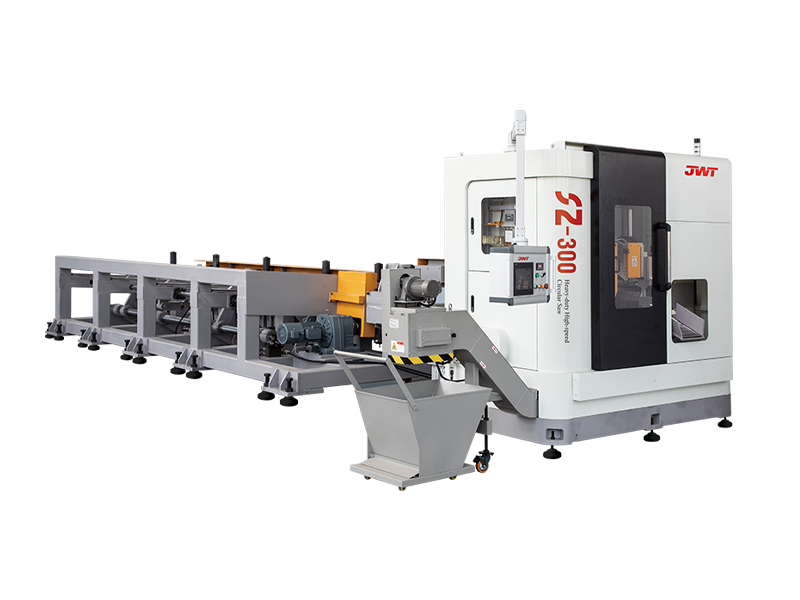
First, identify the cross-section you cut most often. A machine rated for a 30 mm bar will not handle a 120 mm billet. The blade diameter, spindle speed, and clamping system all scale with section size. A general-purpose unit can cover a wide range of smaller bars, while a heavy-duty circular saw machine tool is built for larger sections and heavier chip loads. If your production is mostly 20–60 mm bars and you need flexibility between grades, a general-purpose machine is a safe choice. If you run larger billets or long cycles, a heavy-duty machine with a more rigid base will maintain accuracy over time.
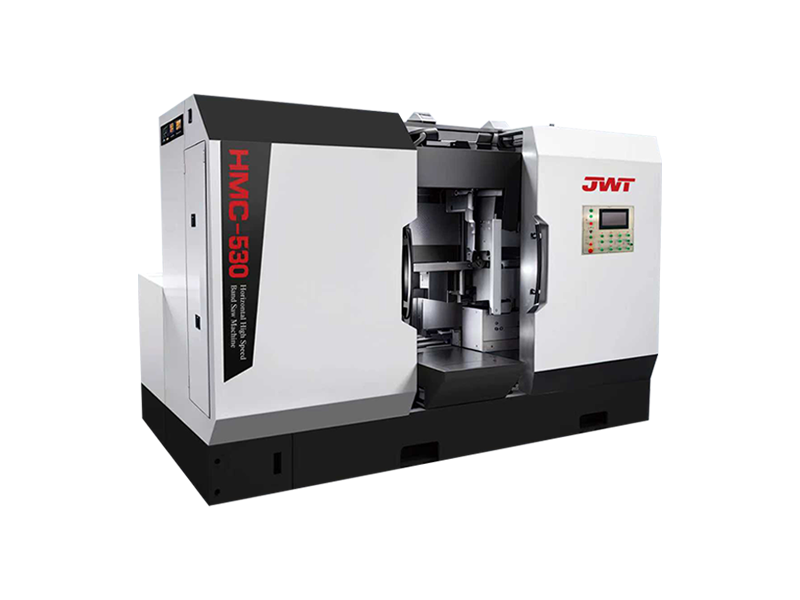
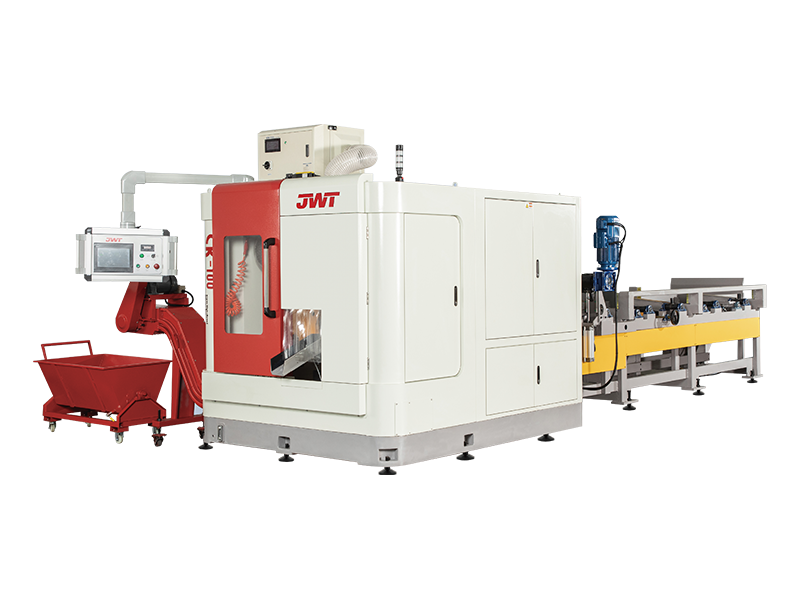
General-Purpose High-Speed Circular Saw Machine for Versatile Bar CuttingThis general-purpose circular saw machine covers a wide range of smaller bar sizes, offering flexibility for job shops with changing material grades and avoiding the need for multiple dedicated units.View Product →A general-purpose high-speed circular saw machine like this offers the flexibility that job shops and smaller forging plants need, especially when the material mix changes frequently.
Cutting speed, blade life, and cost per cut
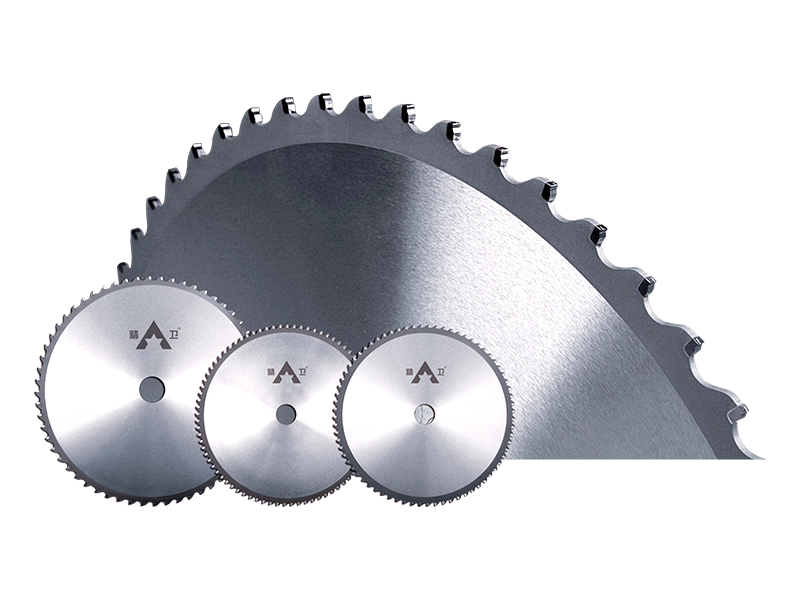
Speed is the obvious metric, but it is not the only one. A circular saw machine tool that cuts faster often uses a different blade geometry and a higher spindle speed. The real question is cost per cut. A blade that lasts three times longer at a slightly slower cycle time can deliver a lower cost per cut. This is where the saw blade becomes a strategic choice. High-speed circular saw blades with heat-resistant carbide teeth are designed for exactly this trade-off. They tolerate higher cutting temperatures without losing their edge, and they let the machine run at its rated speed. When you evaluate a machine, ask about the blade system it was designed around, whether the feed rate is adjustable, and whether the manufacturer supports its own blade line. A machine paired with its own blade can be tuned by the manufacturer, which reduces the risk of poor performance from mismatched consumables.
Length accuracy and repeatability
Length accuracy is another reason to look at the machine's clamping and feeding design. A servo-driven feed system can position each bar with a repeatable stop. It eliminates the inconsistency that comes from a manually set length stop. If your downstream process uses the billet length as a fixed input, a circular saw machine tool with a servo feed will make your production more predictable.
Understand the difference between standard and heavy-duty classes
Standard machines are lighter and faster for smaller sections. Heavy-duty machines are slower in terms of cycle time, but they deliver better dimensional stability on large billets. If you spend most of the day cutting 100 mm FHB bars, a heavy-duty machine will hold length tolerance better because the spindle and clamping system are stiffer. If your work is all under 50 mm, the extra mass of a heavy-duty unit may be unnecessary weight and cost.
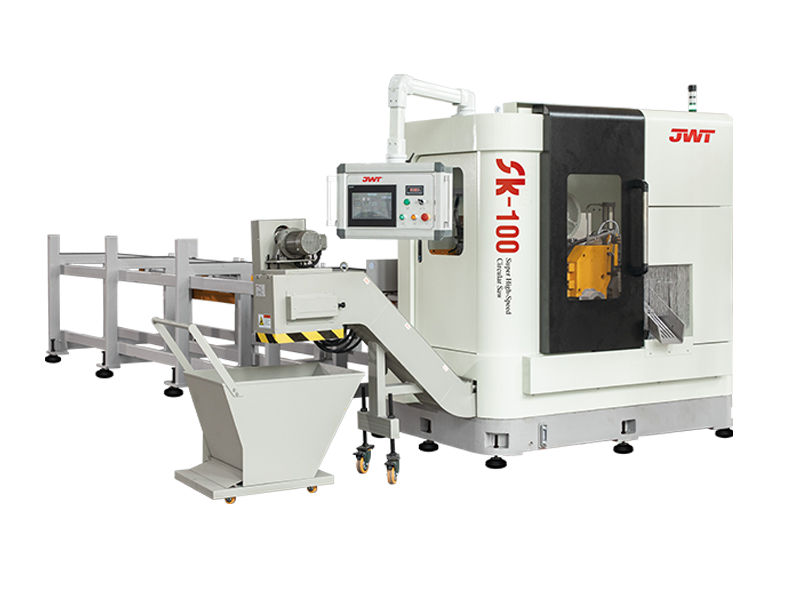
The same logic applies to whether you need a super-high-speed machine. The super-high-speed class is a genuine fit for high-volume, small-section production, where a few seconds per cut make a real difference in daily output. It is less appropriate for mixed batches that constantly change diameter, because blade changeover time becomes a larger share of the total cycle. When the production volume is high enough, the extra investment in a super-high-speed circular saw machine is justified by the increased number of parts per shift.
Also pay attention to the blade diameter and spindle bore. A larger blade allows a larger cutting envelope, but it also increases the tooling cost. For a plant that cuts mostly small bars, a smaller blade diameter reduces the cost per blade and makes changeover easier. This is where the machine class and the blade portfolio need to be aligned.
Where a Circular Saw Machine Tool Earns Its Keep: Forging and Bearing
In forging, the blanking station determines the quality of each subsequent hammer blow. If the billet end is angled or has a rough face, the forging die sees an off-center load. A circular saw machine tool produces a square face that allows the billet to sit flat in the die. For bearing manufacturers, the same clean face reduces the amount of material that must be removed in the turning process, which directly cuts cycle time on the lathe.
The material is usually high-carbon bearing steel or alloy forging steel. These materials are hard on blades, so the machine must have enough rigidity to prevent vibration. Vibration is what causes blade chatter and premature tooth fracture. Heavy-duty circular saw machine tools are designed with this in mind, using thick-walled castings and a high-mass spindle assembly that absorbs cutting forces.
In a bearing plant, a super-high-speed circular saw machine tool with a carbide blade can blank a 40 mm bar in under two seconds. Over a three-shift day, that difference adds up to hundreds of extra billets. The real challenge is not the machine itself but keeping the whole production line in sync. That is why many plants now look beyond single machines.
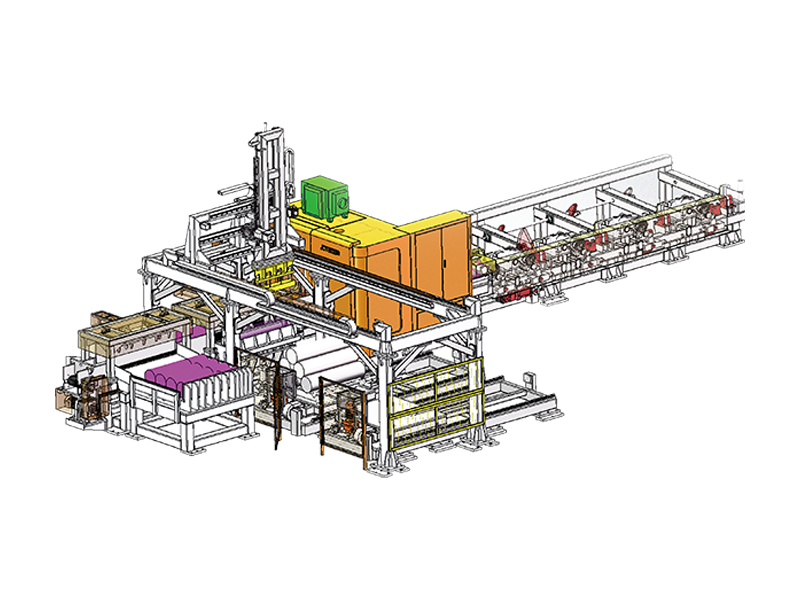
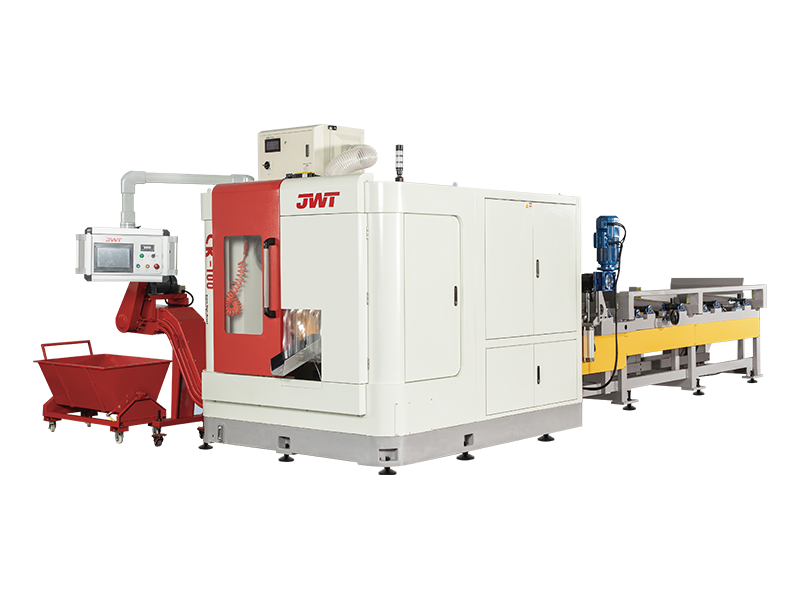 Super High-Speed Circular Saw for Small Diameter BarsDesigned for high-output cutting of small-diameter bars, this super high-speed saw with carbide blades shortens cycle times, making it ideal for bearing plants requiring efficient daily production.View Product →
Super-high-speed machines are engineered for this exact scenario: they shorten the cutting cycle on small-diameter bars, making them a good fit for bearing plants that need high daily output from a compact floor space.
After cutting, many forging and bearing blanks need a chamfer on the end before the next operation. This is often done on a separate chamfering machine. If your process includes this step, the circular saw machine tool's ability to produce a perpendicular face becomes even more important, because it reduces the chamfering time.
From Single Machines to Integrated Blanking Lines
A circular saw machine tool does not operate in isolation. In a high-volume setting, the bottleneck is often the material handling around the saw. An operator loads a bundle, one bar at a time, and then carries the cut pieces away. This manual work limits the machine's true throughput. An integrated blanking line combines a storage system, an automatic feeder, the saw, and a finished-part conveyor. The saw can then run continuously without waiting. Zhejiang Jingweite Machine Tool Co., Ltd. has built this kind of system for forging and bearing customers, and the results are measured in fewer operator hours and more consistent billet lengths.
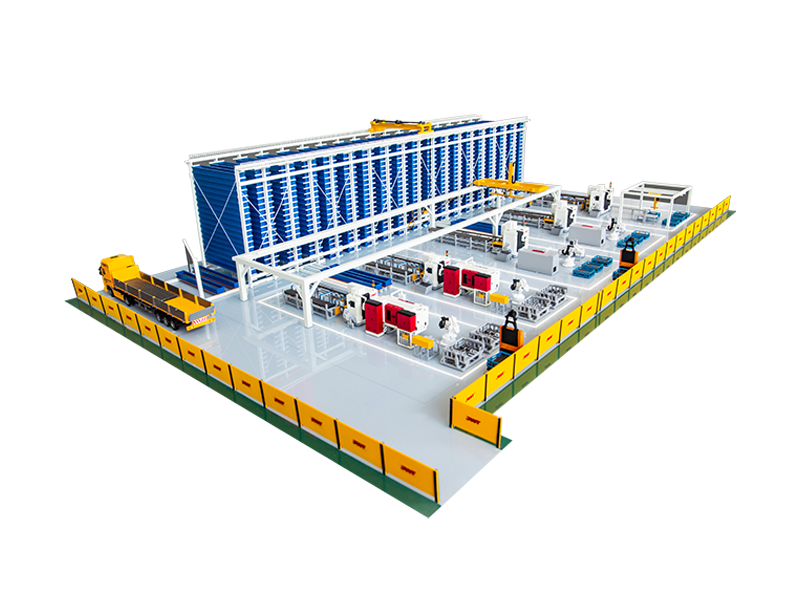
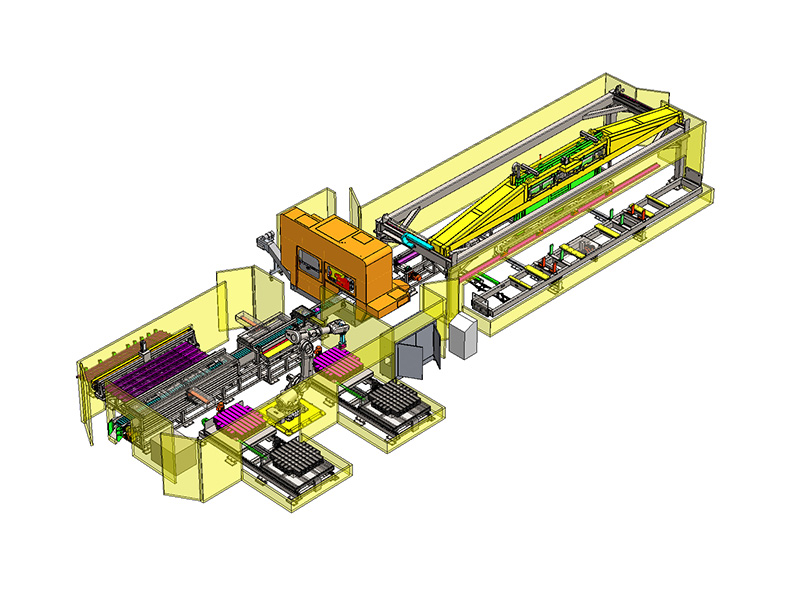 Intelligent Storage Blanking Production Line for Automated SawingThis integrated production line coordinates material storage, feeding, and finished-part handling, enabling continuous saw operation and reducing manual labor in high-volume three-shift environments.View Product →
An intelligent storage blanking production line takes the circular saw machine tool beyond a single cut: it coordinates material flow from storage to finished part, which is especially useful when you are feeding multiple saws or running three shifts.
If you are evaluating a circular saw machine tool for a new plant expansion, consider not just the machine but the system around it. A machine that can run without human intervention becomes much more valuable when the cutting volume justifies the automation investment.
Modern blanking lines can also collect data on blade wear, cycle time, and downtime. The machine controller can flag a blade that needs replacement before it starts producing off-tolerance cuts. This kind of predictive service is a practical benefit for plants that run continuously.
What to Check Before You Commit to a Purchase
Beyond the obvious specs, there are several points that separate a good circular saw machine tool from a frustrating one. Work through this list before signing a purchase order.
- Rigidity test: Ask for a sample cut on your material and inspect the cut face. Look for chatter marks or a burned edge.
- Blade availability: Confirm that the local supplier can deliver the blade you need on a consistent schedule. A machine with a proprietary blade that is hard to source can become a maintenance headache.
- Spare parts: Check the list of wear items, such as hydraulic seals, clamps, and feed rollers, and whether the manufacturer publishes a standard parts list.
- Automation interface: If you plan to add automatic loading later, make sure the machine can accept programmable I/O and communicate with a production controller.
- After-sales support: For a production machine, response time matters. A manufacturer with a service presence in your region is worth more than a slightly lower price.
- Coolant and chip removal: A high-speed circular saw generates fine chips that can be compacted in the cut zone. An efficient mechanical chip conveyor and a well-designed coolant delivery system keep the teeth clean and the temperature down.
When you are comparing quotes, also look at how the machine is shipped and installed. A circular saw machine tool is a heavy, precision unit. Improper alignment during installation can cause subtle accuracy problems that are hard to trace. Ask the supplier whether they supervise the installation and run a test cut on site.
For a broader checklist on the same trade-offs, see this article on benefits and considerations when choosing a metal circular saw machine.
Choosing a circular saw machine tool is ultimately a productivity decision. The machine that matches your material range, your batch profile, and your tolerance standard will repay itself faster than a higher-spec unit that is underused. In forging and bearing plants, the difference shows up in every downstream operation: squarer faces, tighter length tolerances, and less rejected material. That is the practical value of understanding what the machine can do and what it asks of you in return.
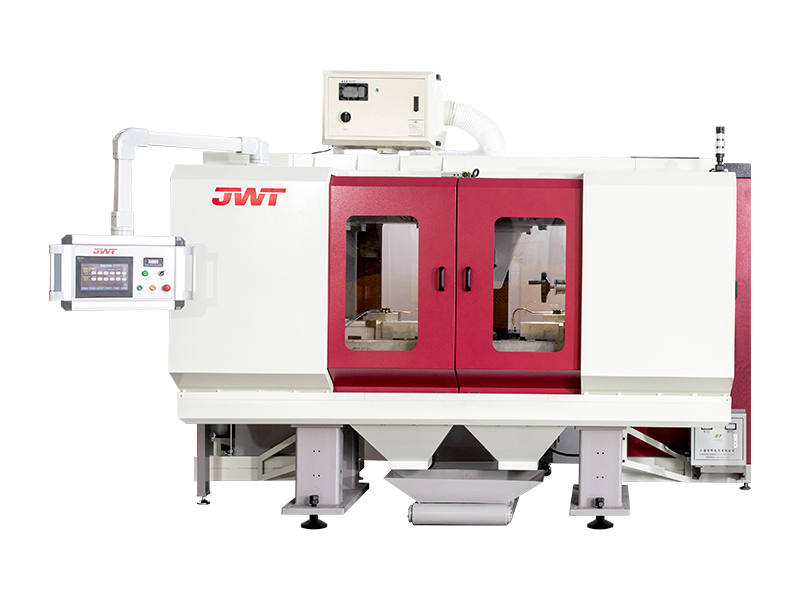

If you are interested in our Circular Saw Machine or production line, please consult us
CONTACT DETAILS
Zhejiang Jingweite Machine Tool Co.,Ltd.
- No.661 Jiyi Road, Wanghai Hi-tech Industrial Park, Haiyan, Jiaxing City, Zhejiang Province
- TEL:+86-0573-86035661
- E-Mail: [email protected]
Products
Quick link
Mobile terminal
