

 中文简体
中文简体 русский
Horizontal High Speed Band Saw Machine: Complete Guide to Types, Specifications, Blade Selection, and Industrial Applications
 2026.03.18
 Industry News
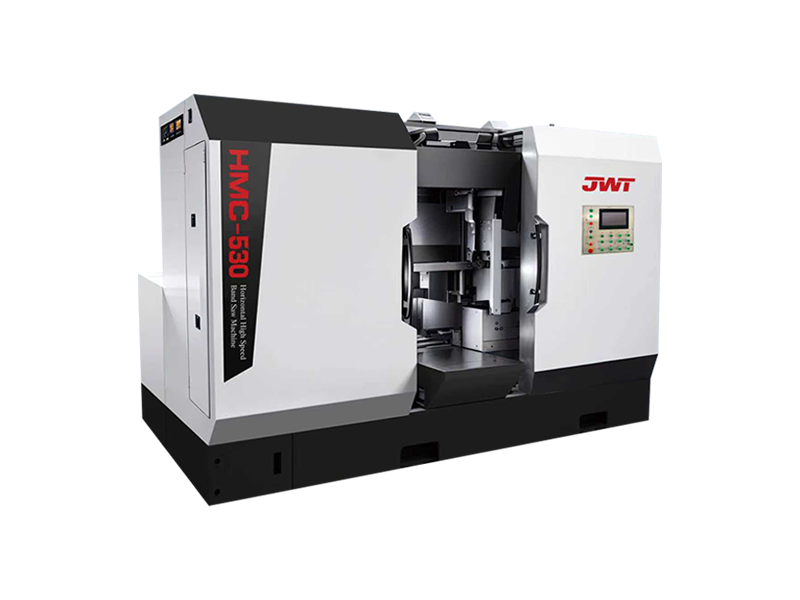
A horizontal high speed band saw machine is a precision cutting tool engineered to slice through metal, wood, plastic, and composite materials at substantially higher blade velocities than conventional band saws, delivering faster cycle times, cleaner cut surfaces, and greater throughput without compromising dimensional accuracy. Unlike vertical band saws where the workpiece is fed manually across a stationary blade, horizontal configurations clamp the material in a fixed vise while the saw head descends or traverses through it — a design that is inherently safer, more repeatable, and better suited to production-volume cutting operations. Industries ranging from aerospace and automotive manufacturing to structural steel fabrication and furniture production rely on these machines as a cornerstone of their raw material processing workflow.
Content
- 1 What Is a Horizontal High Speed Band Saw Machine and How Does It Work
- 2 Key Components of a High Speed Horizontal Band Saw
- 3 Types of Horizontal High Speed Band Saw Machines
- 4 Blade Selection for High Speed Horizontal Band Saws
- 5 Key Technical Specifications to Evaluate When Buying
- 6 Automation Features on Modern High Speed Band Saw Machines
- 7 Applications Across Industries
- 8 Maintenance Best Practices for Maximum Machine Uptime
- 9 Leading Manufacturers of Horizontal High Speed Band Saw Machines
- 10 Cost Considerations and Return on Investment
What Is a Horizontal High Speed Band Saw Machine and How Does It Work
A horizontal band saw machine operates on the principle of a continuous looped blade tensioned between two driven wheels — a powered drive wheel and a passive idler wheel — that rotates the blade in a single, consistent cutting direction. In the horizontal configuration, the saw bow (the frame carrying the blade and wheels) is mounted so that the blade travels in a horizontal plane relative to the floor. The workpiece is secured in a hydraulic or mechanical vise, and the saw bow descends through gravity or hydraulic pressure, feeding the blade through the cross-section of the material being cut.
What elevates a high speed band saw above standard-speed equivalents is blade velocity. Conventional band saws for metal cutting operate at blade speeds of 20–80 meters per minute. High speed variants — particularly those equipped with carbide-tipped or bi-metal variable-pitch blades — operate at 100–400+ meters per minute depending on material type. This expanded speed range allows the machine to transition from cutting hard tool steels at low velocity to cutting aluminum alloys, plastics, and non-ferrous metals at significantly elevated speeds, dramatically reducing cut time per piece and increasing daily output capacity.
The descent of the saw bow is regulated by a hydraulic feed control valve that adjusts the cutting pressure based on material resistance. On fully automatic models, this feed rate is servo-controlled and continuously adjusted by the machine's CNC or PLC system in response to motor load feedback — a feature called adaptive or constant-load feed control that protects the blade from overloading while maximizing cutting speed.
Key Components of a High Speed Horizontal Band Saw
Understanding the major mechanical and electrical subsystems of a horizontal high speed band saw machine is essential for buyers evaluating specifications, maintenance teams managing uptime, and operators diagnosing cutting quality issues. Each component plays a direct role in machine performance and cut quality.
Saw Bow and Frame Structure
The saw bow is the structural assembly that houses the blade wheels, blade guides, and drive motor. On high speed machines, this frame must be significantly more rigid than on standard saws to resist the vibration generated by higher blade velocities and the reactive forces during aggressive cutting. Premium machines use cast iron or heavy-gauge welded steel bows that are stress-relieved after fabrication to eliminate residual distortion. The rigidity of the bow directly determines blade tracking stability and, consequently, cut straightness. A flexing or resonating bow produces wavy cuts — a common quality complaint on underpowered or poorly engineered budget machines.
Drive Motor and Variable Speed System
The drive motor powers the drive wheel that moves the blade. On high speed horizontal band saws, the motor is typically a three-phase induction motor paired with a variable frequency drive (VFD) that allows infinitely variable blade speed adjustment across the full operating range without mechanical gear changes. Motor power on mid-range production machines typically falls between 3 kW and 7.5 kW; heavy-duty structural steel machines may use 11–22 kW motors. The VFD not only enables precise speed setting for each material type but also provides soft-start capability that extends blade life by eliminating the shock load of direct-on-line starting at full speed.
Blade Guide System
Blade guides constrain the blade laterally and prevent it from twisting or deflecting under cutting load. On high speed machines, guides are positioned on both sides of the cutting zone — as close to the workpiece as the material dimensions allow — and use hardened carbide inserts or precision bearing rollers to support the blade back and sides. The closer and more precisely set the guides, the straighter the cut. Guide adjustment is a critical maintenance task; worn or misaligned guides are the leading cause of premature blade failure and diagonal cuts. On automatic CNC machines, guide spacing often adjusts automatically to match the programmed material cross-section.
Hydraulic Vise and Clamping System
The vise holds the workpiece rigidly during cutting. On production machines, hydraulic vises apply controlled clamping force automatically at the start of each cut cycle and release after cut completion. Hydraulic clamping force is typically adjustable from 5 to 50+ kN to accommodate materials ranging from thin-wall tubing to solid structural steel bars. Some machines feature dual vises — a fixed vise on one side and a movable shuttle vise on the other — enabling automatic feeding of bar stock from a bundle or magazine without manual repositioning between cuts.
Coolant System
High speed cutting generates significantly more heat than slow-speed operations. An effective coolant delivery system is not optional on a high speed band saw — it is a prerequisite for achieving rated blade life and cut quality. The coolant system pumps cutting fluid (typically water-soluble oil emulsion or neat cutting oil, depending on the material) directly to the blade-material interface through nozzles positioned at both blade guides. Coolant simultaneously lubricates the blade teeth, flushes chips from the gullets, and dissipates heat from the blade body. Chip conveyors or collection trays remove the swarf-laden coolant from the cutting zone and return it to a sump where chips settle out before the coolant is recirculated.
Types of Horizontal High Speed Band Saw Machines
The horizontal band saw category encompasses several distinct machine configurations, each suited to different production volumes, material types, and levels of automation. Selecting the correct machine type for the application prevents costly over- or under-specification.
| Machine Type | Automation Level | Best Application | Typical Capacity |
| Semi-Automatic Gravity Feed | Semi-auto | Job shops, small batch cutting | Up to 250 mm round |
| Semi-Automatic Hydraulic Feed | Semi-auto | Mixed material shops, medium batch | Up to 400 mm round |
| Fully Automatic Single-Column | Fully auto | High-volume production cutting | Up to 500 mm round |
| Fully Automatic Double-Column | Fully auto / CNC | Heavy structural steel, large profiles | Up to 1,000 mm round or square |
| Bundle Cutting Band Saw | Fully auto | Tube, pipe, and bar bundle processing | Bundle width up to 600+ mm |
| Mitering / Angle-Cut Band Saw | Semi/Fully auto | Structural steel, frames, angle cuts | Angles from 0° to 60° |
Double-Column vs. Single-Column Design
The single-column design, where the saw bow pivots on a single vertical post, is the most common configuration for machines up to 400–500 mm capacity. It is mechanically simpler and less expensive but exhibits some bow flex under heavy cutting loads on large cross-sections. The double-column design uses two vertical guide columns — one on each side of the cutting zone — through which the saw bow travels vertically on precision linear guides. This eliminates bow deflection entirely, making it the preferred design for cutting capacities above 500 mm, high-tolerance applications, and production environments where consistent squareness on every cut is non-negotiable.
Blade Selection for High Speed Horizontal Band Saws
The blade is the most consumable and performance-critical component of any high speed band saw machine. Correct blade selection — matched to the specific material, cross-section, and cutting speed — determines cut quality, blade life, and cost per cut more than any other operational variable.
Blade Material Options
High speed horizontal band saws use one of three primary blade material types. Bi-metal blades are the most widely used: a high-speed steel (HSS) tooth section electron-beam welded to a flexible alloy steel backing. They offer an excellent balance of tooth hardness, backing flexibility, and cost, and are suitable for the full range of ferrous and non-ferrous metals. Carbide-tipped blades use tungsten carbide tooth tips brazed onto a bi-metal body, delivering 3–10 times longer tool life than standard bi-metal blades when cutting abrasive or tough materials — titanium, Inconel, hardened steels, cast iron, and fiber-reinforced composites. Carbon steel blades are used at lower speeds for cutting soft materials such as wood, plastics, and non-ferrous metals where tooth hardness is less critical and cost minimization is the priority.
Tooth Pitch and Set Configuration
Tooth pitch — expressed as TPI (teeth per inch) or in millimeters — is selected based on the cross-section of the material being cut. The fundamental rule is that at least 3–6 teeth should be in contact with the material at any point during the cut to prevent tooth stripping, vibration, and poor surface finish. Thin-wall tubing and small-diameter bar require higher TPI (10–14 TPI), while large solid billets use coarser pitches (1.5–3 TPI) to provide adequate gullet space for chip evacuation. Variable-pitch blades — where tooth spacing alternates between two different pitches — are widely used on production machines because they reduce harmonic vibration and cutting noise compared to constant-pitch blades, extending both blade life and machine service life.
Recommended Blade Speeds by Material
Setting the correct blade speed for the material being cut is one of the most important operating parameters on a high speed band saw. Running too fast generates excess heat and premature blade failure; running too slow reduces productivity without improving blade life. The following table provides general guidance:
| Material | Recommended Blade Speed (m/min) | Blade Type |
| Low-carbon mild steel | 60–90 | Bi-metal |
| Stainless steel (304/316) | 30–60 | Bi-metal or carbide-tipped |
| Tool steel / alloy steel | 20–50 | Carbide-tipped |
| Aluminum alloys | 300–600 | Bi-metal (coarse pitch) |
| Copper / brass | 100–200 | Bi-metal |
| Titanium | 15–30 | Carbide-tipped |
| Plastics / HDPE | 300–800 | Carbon steel or bi-metal |
| Hardwood | 400–900 | Carbon steel |
Key Technical Specifications to Evaluate When Buying
When comparing horizontal high speed band saw machines from different manufacturers, a clear understanding of the core specifications allows for meaningful side-by-side evaluation rather than reliance on marketing claims alone.
- Cutting capacity (round / square / rectangle): The maximum cross-section dimensions the machine can accept. For example, 350 mm round × 350 mm × 250 mm rectangle. Always verify that the capacity applies to the full range of cut angles if a mitering function is included.
- Blade speed range (m/min): The minimum and maximum blade velocity. A wider range — such as 20–400 m/min — provides greater material flexibility than a narrow range. Confirm whether the speed control is stepped (discrete gear ratios) or continuously variable via VFD.
- Blade dimensions: Length, width, and thickness of the compatible blade. Blade dimensions are machine-specific; confirm availability and cost of replacement blades before purchase, particularly for non-standard sizes.
- Motor power (kW): Drive motor power determines the machine's ability to maintain blade speed under cutting load. For heavy structural sections, higher motor power (7.5 kW and above) prevents blade stalling and overheating.
- Feed control type: Gravity, hydraulic, or servo-controlled hydraulic. Servo-controlled feed with constant-load feedback is the most capable option for variable material types and cross-sections.
- Vise clamping force (kN): Higher clamping force enables secure holding of large and hard materials without slippage during cutting.
- Coolant system pump flow rate: Adequate coolant flow (typically 10–30 liters/minute) is essential for blade cooling and chip evacuation at high cutting speeds.
- Control system: PLC with operator panel, full CNC with touchscreen, or manual control. CNC models offer programmable cut length, quantity, speed, and feed rate storage for multiple material presets.
Automation Features on Modern High Speed Band Saw Machines
Advanced automation is one of the defining characteristics that separates contemporary high speed horizontal band saw machines from their predecessors. On fully automatic CNC models, the machine handles the complete cut cycle — material feeding, vise clamping, blade descent, cut completion detection, vise release, part ejection, and return to home position — without any operator intervention between cuts. This enables one operator to supervise multiple machines simultaneously, dramatically reducing labor cost per piece.
Automatic Material Feeding Systems
Automatic bar feeders use a servo-driven shuttle vise that grips the bar stock and advances it by the programmed cut length after each cycle. Magazine-style bundle loaders automatically index new bars or tubes from a pre-loaded bundle into the cutting position when the previous bar is exhausted. These systems, combined with an automatic finished-part conveyor or parts collector on the exit side, create a fully unattended cutting cell capable of running continuously through a shift with only periodic material replenishment.
Adaptive Feed Rate Control
Adaptive feed rate control — also called constant-load or intelligent feed control — continuously monitors the drive motor current as a proxy for cutting resistance. When the motor load rises above the setpoint (indicating the blade is cutting too aggressively), the system automatically reduces the feed rate. When load drops below the setpoint, feed rate increases. This keeps the blade operating at the optimal chip load at all times regardless of variations in material hardness, cross-section changes (such as encountering a hollow tube section within a solid round), or blade wear progression — maximizing both blade life and cutting speed simultaneously.
Broken Blade Detection and Safety Systems
Production machines incorporate broken blade detection sensors — typically proximity switches or blade tension monitors — that immediately halt the cut cycle and generate an alarm if the blade breaks or goes slack. This prevents damage to the workpiece, blade guides, and machine structure from a loose blade, and enables rapid fault diagnosis and blade replacement. Additional safety features on modern machines include two-hand control requirements for manual operations, light curtains around the cutting zone, interlocked enclosure guards, and hydraulic pressure monitoring that prevents the saw bow from descending without confirmed vise clamping.
Applications Across Industries
High speed horizontal band saws serve as primary material preparation equipment across a remarkably broad range of manufacturing and fabrication industries. The machine's ability to cut virtually any solid or hollow cross-section material cleanly and efficiently makes it one of the most universally applicable machine tools in a production environment.
- Metal service centers and steel stockholders: High-volume cut-to-length processing of bar stock, structural sections, tube, and pipe from full mill lengths to customer-specified sizes. Production rates on automatic lines can exceed 200–500 cuts per shift for small-diameter bar.
- Aerospace and defense manufacturing: Precision blanking of titanium, aluminum alloy, and nickel superalloy billet for subsequent machining into structural components, engine parts, and landing gear elements. Tight tolerances on cut length and squareness are essential to minimize machining stock removal.
- Automotive components manufacturing: Cutting steel and aluminum bar stock into blanks for forging, machining into engine components, transmission parts, suspension members, and fasteners. High cycle rates and consistent piece weight are critical for feeding downstream forging and machining operations.
- Structural steel fabrication: Cutting H-beams, I-beams, channels, angles, and hollow structural sections (HSS) to length for steel construction projects. Mitering band saws with angle vise capability are particularly valuable for cutting connection angles and frame joints.
- Tool and die manufacturing: Cutting high-speed steel and alloy steel blocks and rounds for subsequent EDM machining, grinding, and heat treatment into punches, dies, and forming tools.
- Plastics and composites processing: High-speed cutting of acrylic, HDPE, nylon, PTFE, and fiber-reinforced plastic profiles and rods. The non-sparking cutting action and adjustable speed make horizontal band saws preferable to abrasive cutting methods for many engineering plastics.
- Furniture and wood manufacturing: High speed horizontal band saws adapted for wood use cut large timber logs, laminated beams, and hardwood billets with cleaner kerf and less material waste than circular saws for equivalent cross-sections.
Maintenance Best Practices for Maximum Machine Uptime
Consistent preventive maintenance is the single most important factor in sustaining the performance, accuracy, and blade life of a horizontal high speed band saw machine. The following practices represent the minimum maintenance discipline for a production environment:
- Daily blade inspection: Inspect blades at the start of each shift for chipped or missing teeth, cracks in the blade back, and evidence of blade set loss. A blade showing these signs should be replaced immediately, not run until failure.
- Guide insert inspection and replacement: Check carbide guide inserts and roller bearings for wear weekly. Worn guides allow blade deflection that produces non-square cuts and accelerates blade fatigue. Replace inserts proactively rather than waiting for visible damage.
- Blade tension verification: Verify blade tension at the start of each shift using the machine's tension indicator. Undertensioned blades wander; overtensioned blades fatigue rapidly. Follow the blade manufacturer's recommended tension for the specific blade width and thickness.
- Coolant concentration and cleanliness: Check coolant concentration (typically 6–10% for water-soluble oil) weekly using a refractometer and top up as required. Replace the full coolant charge monthly or whenever contamination with tramp oil, chips, or bacterial growth is detected. Dirty coolant reduces cooling efficiency and promotes blade corrosion.
- Wheel alignment and blade tracking: Verify that the blade tracks centrally on both wheel crowns and does not contact the wheel flanges during operation. Misaligned wheels cause rapid blade back-edge wear and fatigue cracking. Re-align per manufacturer specification whenever blade tracking issues are observed.
- Hydraulic system service: Change hydraulic oil and filters at the manufacturer's recommended interval (typically annually). Check hydraulic hoses and fittings for leaks monthly. Monitor hydraulic pressure at key points in the system to detect pump wear or valve degradation before it causes functional problems.
- Drive wheel and idler wheel bearing inspection: Check wheel bearings for noise, roughness, and play quarterly. Failed wheel bearings cause blade tracking instability and, if not caught early, can result in catastrophic blade failure and machine damage.
Leading Manufacturers of Horizontal High Speed Band Saw Machines
The global market for horizontal band saw machines is served by manufacturers ranging from European premium brands with deep engineering heritage to competitive Asian producers offering strong value at mid-market price points. Understanding the landscape helps buyers align supplier selection with quality requirements, service expectations, and budget constraints.
- Behringer (Germany): Widely regarded as the global benchmark for high-performance band saw machines, Behringer produces fully automatic and CNC band saws for the most demanding aerospace, automotive, and structural steel applications. Their HBE and HBP series double-column machines are specification references for high-volume production environments.
- Kasto (Germany): Another German manufacturer specializing in fully automatic sawing and storage systems. Kasto's KASTOTEC and KASTAMILL series are prominent in European metal service centers and aerospace supply chains.
- Amada Machine Tools (Japan): Amada's HA and HFA series horizontal band saws are widely used in Asian and global manufacturing markets. Known for reliability, precision, and comprehensive after-sales support networks.
- MEP (Italy): Italian manufacturer producing a comprehensive range of manual, semi-automatic, and fully automatic horizontal band saws. Strong presence in European fabrication and metalworking markets.
- DoAll (USA): A historic American band saw brand with a broad range of horizontal machines for job shops and production environments across North America.
- Cosen (Taiwan): One of the leading Taiwanese manufacturers of horizontal band saws, offering competitive mid-range semi-automatic and fully automatic machines widely distributed in North America, Europe, and Southeast Asia.
- Everising (Taiwan) / Clausing (USA — Taiwanese OEM): Popular in the job shop and educational market segment, offering cost-effective horizontal band saws with solid performance for medium-duty applications.
Cost Considerations and Return on Investment
Capital investment in a horizontal high speed band saw machine spans a wide range depending on cutting capacity, automation level, and brand origin. Entry-level semi-automatic machines from Asian manufacturers start at approximately USD 8,000–20,000 for capacities up to 250 mm round. Mid-range fully automatic single-column machines from Taiwanese and European manufacturers with CNC control typically cost USD 30,000–80,000. Heavy-duty double-column CNC machines from premium German or Japanese manufacturers for capacities above 500 mm can range from USD 150,000 to over USD 500,000 for turnkey systems with automated feeding and part handling.
The ROI calculation for a production band saw should account for several factors beyond the purchase price. Blade cost per cut is a critical metric: a carbide-tipped blade costing USD 400–800 that produces 5,000–15,000 cuts delivers a blade cost of USD 0.03–0.15 per cut — far lower than the equivalent tooling cost on a cold saw or abrasive cutoff machine. Labor savings from automation are typically the largest ROI driver: a fully automatic line that eliminates two manual positions per shift generates labor savings that frequently pay back the machine investment in 12–36 months in high-labor-cost markets. Energy efficiency, scrap reduction from improved cut accuracy, and downstream machining time savings from better cut quality further strengthen the financial case for premium machine investment.
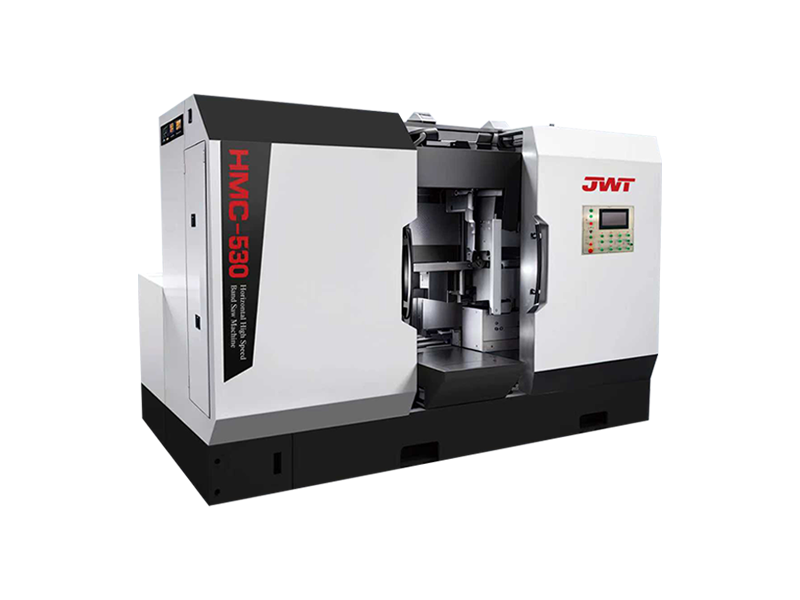
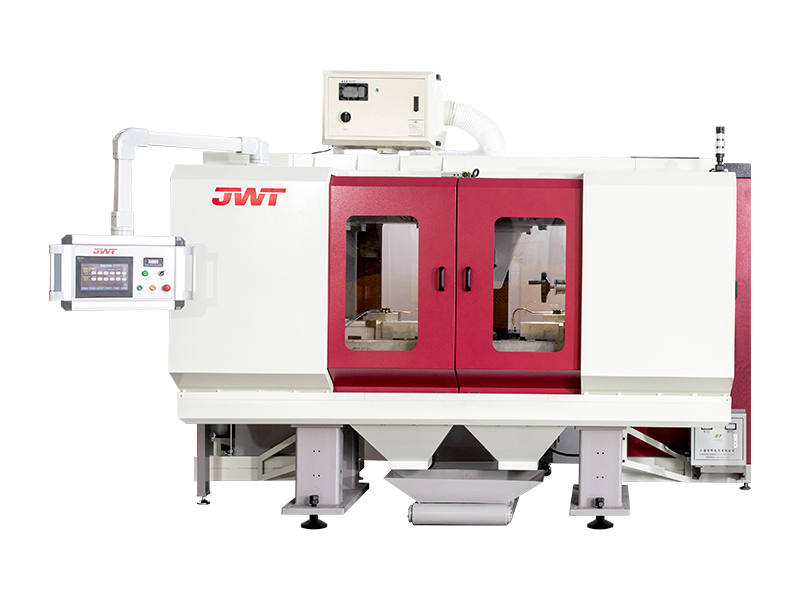
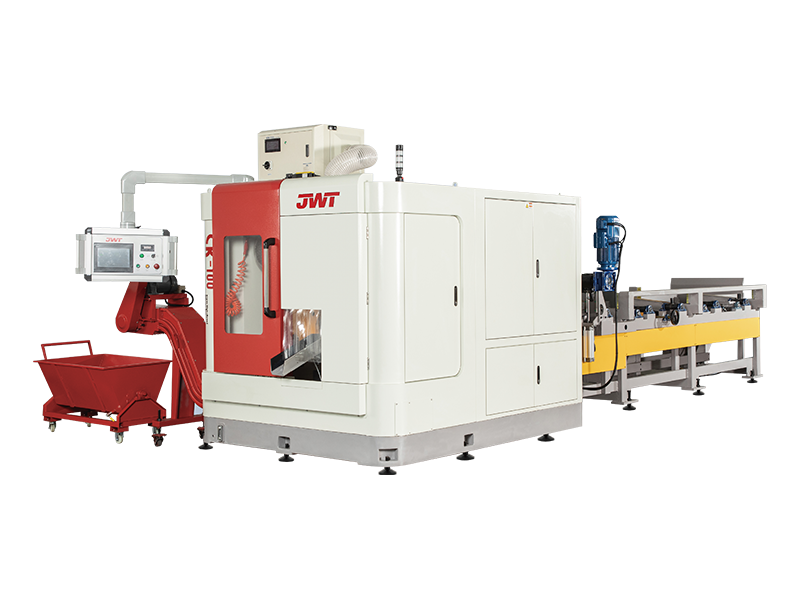
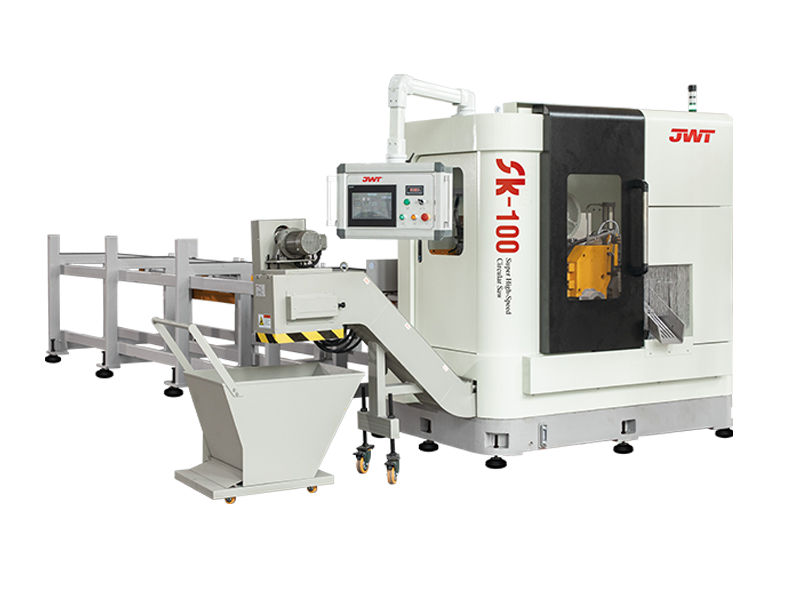

If you are interested in our Circular Saw Machine or production line, please consult us
CONTACT DETAILS
Zhejiang Jingweite Machine Tool Co.,Ltd.
- No.661 Jiyi Road, Wanghai Hi-tech Industrial Park, Haiyan, Jiaxing City, Zhejiang Province
- TEL:+86-0573-86035661
- E-Mail: [email protected]
Products
Quick link
Mobile terminal
