

 中文简体
中文简体 русский
Circular Saw Machine Explained: How to Choose, Use, and Get Clean Cuts Every Time
 2026.04.01
 Industry News
Content
- 1 What Makes a Circular Saw Machine Different From Other Power Saws
- 2 Handheld Circular Saw Machines: Corded vs. Cordless and What the Specs Actually Mean
- 3 Stationary Circular Saw Machines: Table Saws, Panel Saws, and Sliding Compound Miter Saws
- 4 Circular Saw Blade Selection: The Variable That Determines Cut Quality More Than Anything Else
- 5 Setting Up a Circular Saw Machine for a Specific Cut: Depth, Bevel, and Guide Systems
- 6 The Most Common Circular Saw Mistakes and How to Avoid Them
- 7 How to Read a Circular Saw Machine Spec Sheet Without Getting Misled
- 8 Maintenance That Keeps a Circular Saw Machine Cutting Accurately for Years
What Makes a Circular Saw Machine Different From Other Power Saws
A circular saw machine uses a toothed disc blade that spins at high speed around a central arbor, cutting through material as the blade is pushed or fed through the workpiece. Unlike a reciprocating saw that moves the blade back and forth, or a band saw that runs a continuous loop, the circular sawing machine delivers a consistent unidirectional cutting action that produces smoother, faster cuts with less vibration. This fundamental mechanical difference is why circular saws dominate in both professional construction and industrial panel processing — the spinning disc generates tremendous cutting momentum that handles everything from thin plywood sheets to thick hardwood beams without bogging down the way an oscillating blade tends to.
The range of circular saw machines available today is broader than most buyers realize. At one end, you have compact handheld models weighing under four pounds that a framing carpenter carries on a tool belt all day. At the other end, industrial circular saw machines in panel processing plants run workpieces through a fixed blade on a powered feed table, processing hundreds of sheets per shift with CNC-guided precision. Both are fundamentally the same mechanism — a circular blade on a motorized spindle — scaled and configured for completely different workflows. Understanding where your needs fall on that spectrum is the first and most important step in choosing the right machine.
Handheld Circular Saw Machines: Corded vs. Cordless and What the Specs Actually Mean
The handheld circular cutting saw machine is the most widely owned and most frequently misunderstood category. Buyers often focus on amperage or voltage as a proxy for power, but these numbers are only meaningful in context. Here is what the key specifications actually tell you about real-world performance:
Corded Circular Saw Machines
Corded models are rated in amps, with consumer-grade saws typically running between 12 and 15 amps and professional saws reaching 15 amps on a standard 120V circuit. A 15-amp corded circular saw machine draws the maximum sustained current a standard outlet can safely supply, which translates to roughly 1,800 watts of continuous power at the motor. This sustained power delivery is the key advantage of corded saws — they maintain consistent blade speed under load without the voltage sag that affects battery-powered tools when the pack depletes. For contractors cutting through 3-inch-thick hardwood joists repeatedly throughout a full work day, a corded circular saw machine with a high-quality 7-1/4 inch blade is still difficult to beat on pure cutting performance.
Cordless Circular Saw Machines
Cordless circular saw machines are rated in volts, with 18V and 20V max tools dominating the mid-range market and higher-capacity 36V, 54V, and 60V platforms handling heavier work. The voltage rating alone is far less useful than the combination of voltage and amp-hour (Ah) rating of the battery pack. A 20V saw running a 2.0Ah pack will stall cutting through dense hardwood in ways the same saw with a 5.0Ah pack won't, because the higher-capacity pack sustains voltage under heavy load. Modern brushless motor cordless circular saws on high-voltage platforms have reached a point where they genuinely rival corded models for most construction cutting tasks — the practical gap has closed significantly in the last five years, and the freedom from a cord on a job site is a tangible daily benefit.
Blade Size and What It Determines
Blade diameter is the specification that directly determines maximum cut depth, which is the most practically important dimension for any circular saw machine. A 7-1/4 inch blade — the most common size for full-size handheld saws — provides a maximum cut depth of approximately 2-1/2 inches at 90 degrees, enough to cut through standard 2x lumber in a single pass with room to spare. Smaller 6-1/2 inch saws sacrifice about 3/8 inch of max depth in exchange for a lighter, more compact body that's easier to handle on overhead cuts or in tight spaces. Mini circular saws with 4-1/2 inch blades are specialized tools designed for thin panel work, underlayment, and one-handed operation — they are not substitutes for a full-size circular cutting saw machine on structural lumber.
Stationary Circular Saw Machines: Table Saws, Panel Saws, and Sliding Compound Miter Saws
Stationary circular saw machines share the same basic blade-and-motor mechanism as handheld saws but mount that mechanism in a fixed frame that guides the cut with far greater precision and consistency. The three main stationary types each serve a distinct purpose in a woodworking or production environment.
Table Saws
A table saw positions the circular blade vertically through a slot in a flat table surface. The workpiece is fed horizontally into the spinning blade, guided by a rip fence for parallel cuts or a miter gauge for crosscuts at a fixed angle. Table saws are the most versatile stationary circular saw machine in a woodworking shop — ripping sheet goods to width, cutting dadoes with a stacked blade set, and producing repeatable rip cuts to within a few thousandths of an inch. Cabinet table saws with cast iron tops and enclosed cabinet bases represent the precision tier, with blade runout typically under 0.002 inches and vibration-dampening mass that produces noticeably smoother cut surfaces than portable contractor table saws. Jobsite table saws trade some of that precision and mass for a folding stand and a weight under 60 pounds, making them practical for renovation work where the tool needs to move between floors or job sites frequently.
Panel Saws and Vertical Panel Processing Machines
Industrial circular saw machines in cabinetry and furniture manufacturing often take the form of horizontal or vertical panel saws — large frame machines that support a full 4x8 foot sheet of plywood or MDF while a motorized circular blade carriage travels across it in a guided track. Vertical panel saws occupy a fraction of the floor space of a horizontal table saw setup for the same size sheet, which is why they dominate in smaller cabinet shops where every square foot of floor space is accounted for. These are specialized stationary circular sawing machines that most individual woodworkers won't need, but understanding they exist clarifies the full capability range of the circular saw machine category.
Sliding Compound Miter Saws
A sliding compound miter saw uses a circular blade on an arm that pivots for miter angles, tilts for bevel angles, and slides on rails to extend its crosscut capacity. A 10-inch sliding compound miter saw can crosscut a board up to 13 or 14 inches wide — far beyond what the blade diameter alone would suggest — by pulling the blade carriage toward the operator across the workpiece rather than simply plunging it down. This makes sliding miter saws the dominant choice for trim work, stair stringers, crown molding, and any application requiring precise angled crosscuts on wide boards. They are not designed for ripping — that remains the table saw's territory — but for the crosscutting and mitering tasks that define finish carpentry, no other circular saw machine configuration approaches their speed and accuracy.
Circular Saw Blade Selection: The Variable That Determines Cut Quality More Than Anything Else
The same circular saw machine can produce a ragged, splintered cut or a glass-smooth surface depending entirely on which blade is mounted. Blade selection is where most casual users leave the most quality on the table, and understanding the key variables costs nothing except the time to read about them.
The tooth count on a circular saw blade is the most commonly referenced specification, and it directly governs the trade-off between cut speed and cut smoothness. A 24-tooth framing blade removes material aggressively — each tooth takes a large bite, which means fast cuts but a rough edge with visible saw marks and significant tearout on the face veneer of plywood. A 60-tooth or 80-tooth finishing blade takes many small bites per revolution, which slows the cut rate but produces an edge that may need no sanding at all on hardwoods. The practical rule: use the lowest tooth count that gives acceptable surface quality for the application, because high-tooth-count blades working through heavy material overheat faster and wear sooner.
Tooth geometry matters as much as tooth count. The hook angle — the angle at which each tooth leans forward relative to the blade's rotation axis — controls how aggressively the blade grabs the workpiece. Positive hook angles (teeth leaning forward) are used on ripping blades that cut along the wood grain, because they pull the material through aggressively. Negative hook angles (teeth leaning back) are used on miter saw blades and crosscut blades, where a grabbing blade would cause dangerous kickback as it contacts the workpiece across the grain. Alternate Top Bevel (ATB) tooth geometry — teeth alternating between left-bevel and right-bevel angles — is the standard for crosscut and combination blades, as the alternating angles shear wood fibers cleanly from both sides of the kerf.
| Blade Type | Tooth Count | Best Application | Cut Speed | Cut Quality |
| Framing / Ripping | 18–24T | Dimensional lumber, rough cuts | Very Fast | Rough |
| Combination | 40–50T | General purpose rip and crosscut | Moderate | Good |
| Crosscut / Finishing | 60–80T | Hardwood, plywood face veneer, trim | Slow | Excellent |
| Plywood / Panel | 100–140T | Laminated panels, melamine, veneer ply | Very Slow | Superior |
| Metal Cutting TCT | 48–68T | Aluminum, thin steel, copper | Moderate | Good–Excellent |
| Fiber Cement / Masonry | 4–6T (diamond or PCD) | Cement board, Hardieplank siding | Fast | Good |
Setting Up a Circular Saw Machine for a Specific Cut: Depth, Bevel, and Guide Systems
How you set up and guide a circular saw machine before the cut starts has more impact on the result than your technique during the cut itself. Getting these three settings right eliminates most of the accuracy problems that frustrate circular saw users.
Setting Cut Depth Correctly
The correct cut depth for a wood circular saw machine is blade teeth protruding approximately 1/4 to 3/8 inch below the bottom face of the workpiece — just enough that the full tooth passes through, not so much that the blade is cutting more air than material below the wood. Many users set the blade as deep as it will go on the assumption that more exposed blade means more powerful cuts. The opposite is true: excessive blade exposure increases kickback risk, puts more of the blade in contact with the workpiece at any given moment increasing load on the motor, and can cause the blade to bind in deeper kerfs. Setting cut depth properly is a simple adjustment that takes ten seconds and meaningfully improves both safety and cut quality.
Bevel Adjustment and Verification
Most handheld circular cutting saw machines allow the base plate to tilt for bevel cuts, typically up to 45 or 56 degrees. The bevel angle is set using a scale on the front of the saw body, but this scale is often inaccurate out of the box or after any rough handling. Before relying on a bevel angle for joinery or finish work, always verify the actual blade angle with a reliable digital angle gauge or a precision square held against the blade body — not the teeth, which can have slight set that throws the reading off. Adjust the stop screw at 90 degrees and at 45 degrees independently if your saw allows it, and recheck both after any significant impact to the saw body.
Guide Systems for Straight, Accurate Cuts
A circular saw machine guided freehand against a pencil line produces inconsistent results even in experienced hands. The most effective solution for straight cuts is a straightedge guide — either a manufactured aluminum track system or a shop-made guide using a piece of straight-edged MDF clamped to the workpiece. Track saw systems take this concept further: the circular saw machine rides in a dedicated aluminum rail with a zero-clearance strip that virtually eliminates tearout on the cut line and provides a positive mechanical guide that doesn't require balancing the saw against an edge. For sheet goods processing, a track circular saw machine setup rivals the accuracy of a panel saw at a fraction of the cost and floor space, which is why they have become the dominant choice for small cabinet shops and serious woodworking hobbyists over the past decade.
The Most Common Circular Saw Mistakes and How to Avoid Them
Most problems people encounter with circular saw machines — splintered cuts, blade binding, kickback, wandering cut lines — trace back to a small set of recurring errors. Each one has a direct fix.
- Cutting with a dull blade: A dull circular saw blade forces the motor to work harder, generates more heat, produces rougher cuts, and increases the chance of kickback as the blade deflects under the extra load rather than cutting cleanly. Most woodworkers wait far too long to replace or resharpen blades. If you're pushing harder than usual to maintain forward progress, or if the wood is scorching along the cut line, the blade is telling you it needs attention.
- Cutting unsupported workpieces that pinch the blade: When a board is supported at both ends but not near the cut, the two halves sag toward each other as the cut progresses, pinching the blade from both sides and causing immediate binding or kickback. Always support the workpiece close to the cut line on both sides, and allow the offcut to fall away freely rather than propping it up.
- Using the wrong blade for the material: Running a 24-tooth framing blade through finish plywood, or using a standard wood circular saw blade on fiber cement siding, produces predictably bad results — either gross tearout on the veneer or rapid blade destruction on the abrasive material. Keeping a small selection of application-specific blades costs less than most people assume and produces dramatically better results.
- Letting go of the saw before the blade stops: The blade of a handheld circular saw machine continues to spin for several seconds after the trigger is released. Setting the saw down or moving it toward yourself while the blade is still coasting is a common cause of accidental cuts to the hand or leg. Keep the saw pointed away from your body until it has completely stopped, or use the blade brake feature if your model has one.
- Standing directly behind the blade in the kickback path: Kickback projects the saw directly back toward the operator along the line of the cut. Standing slightly to the side of the cut line — not directly behind the saw — means a kickback event pushes the machine to the side rather than back into your body. This simple habit costs nothing and provides meaningful protection against the most dangerous failure mode of any circular cutting saw machine.
- Ignoring the lower blade guard: The lower guard retracts automatically when the saw is pushed into a cut and springs back when the cut is complete. Some operators retract this guard manually and leave it tied back because they find it awkward. This eliminates the only barrier between the spinning blade and whatever the saw contacts during a stumble, slip, or unexpected movement — never disable or bypass the lower guard.
How to Read a Circular Saw Machine Spec Sheet Without Getting Misled
Spec sheets for circular saw machines contain several figures that require context to interpret correctly. Understanding what each number actually represents — and what it doesn't — protects against purchasing a machine that looks strong on paper but disappoints in use.
No-load RPM is the blade speed with nothing cutting — the motor spinning freely. This is almost always listed on the spec sheet because it's the highest, most impressive number the machine produces. The under-load RPM, which is the actual speed when cutting through material, is typically 15 to 25 percent lower and is never listed. A saw with a lower no-load RPM but a more efficient motor design and better torque curve can outperform a higher-RPM competitor when cutting actual wood. Torque figures, where listed, are a more useful predictor of performance under load than no-load speed alone.
Blade size and maximum cut depth are usually listed at 90 degrees only. Always check the 45-degree bevel cut depth separately, as it is typically 3/8 to 1/2 inch less than the 90-degree rating. If you regularly need to cut 2x material at a 45-degree bevel, this distinction matters — some compact circular saw machines that cut 2-1/2 inches at 90 degrees fall short of the 1-1/2 inch actual thickness of a 2x board at 45 degrees, making them useless for bevel cuts on dimensional lumber.
Weight is listed for the bare tool on most cordless circular saw machines, without battery. A saw listed at 6.8 pounds with a 5.0Ah battery pack that adds another 1.6 pounds is actually an 8.4-pound tool in your hand for a full working day. When comparing handheld circular saw models intended for extended overhead or one-handed use, always factor in the actual working weight including the battery you intend to run.
Maintenance That Keeps a Circular Saw Machine Cutting Accurately for Years
A circular saw machine that is properly maintained retains its cut accuracy and mechanical reliability for ten to twenty years of regular use. The maintenance requirements are minimal — far less than most power tools — but the few tasks that do matter have a disproportionate impact on long-term performance.
The base plate is the reference surface that determines the accuracy of every cut a handheld circular saw machine makes. If it gets bent, warped, or develops burrs from being dragged across rough surfaces, every subsequent cut will be off-angle. Inspect the base plate periodically by setting the saw on a known-flat surface — a cast iron table saw top or a precision granite slab — and checking for any rocking or gap. Mild distortions in aluminum base plates can often be carefully flattened; more significant damage usually means replacing the plate, which is an inexpensive repair on most models.
Sawdust accumulation inside the motor housing is the primary cause of premature motor failure in circular saw machines, particularly on wood circular saw machines used for dusty operations like cutting MDF or pine. Blow out the vents and motor housing with compressed air after every significant use session. Pay particular attention to the air intake slots — these are where the motor draws cooling air, and a packed-up intake can cause a motor running at full load to overheat within minutes. Brushed motor saws also require carbon brush inspection and replacement roughly every 50 to 100 hours of use; most models allow brush access through a screw-out cap on the motor housing without any disassembly.
The blade arbor, flange, and any blade washers should be kept clean and free of resin buildup. Pitch and resin from cutting pine, cedar, and other resinous softwoods accumulate on the blade and around the arbor, and over time this buildup can create runout at the blade — a wobble that degrades cut quality and accelerates blade wear. A five-minute soak of the blade in a dedicated blade and bit cleaner, followed by a brush scrub, removes this buildup completely and restores a blade's cutting performance noticeably.
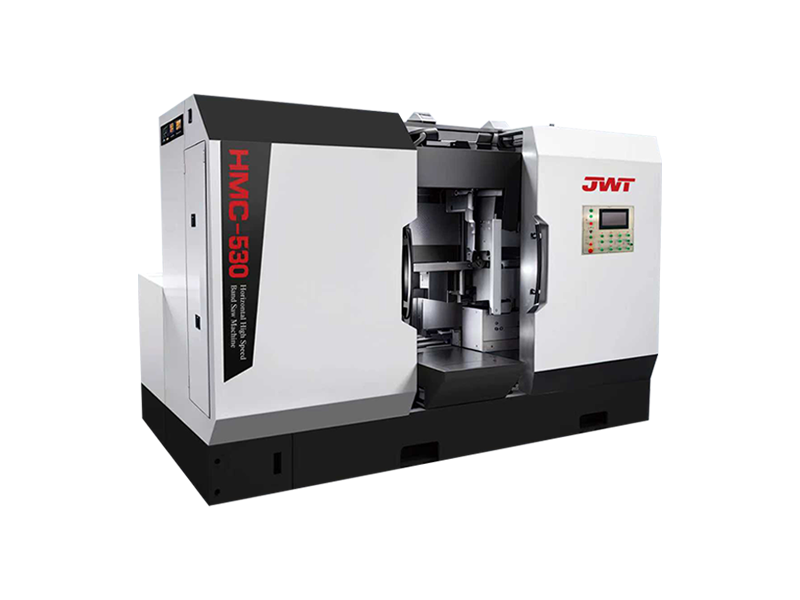
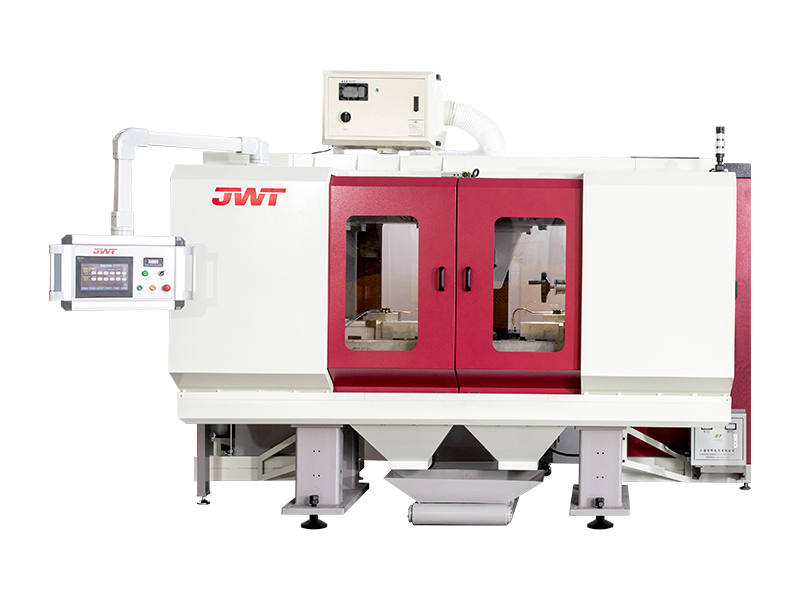
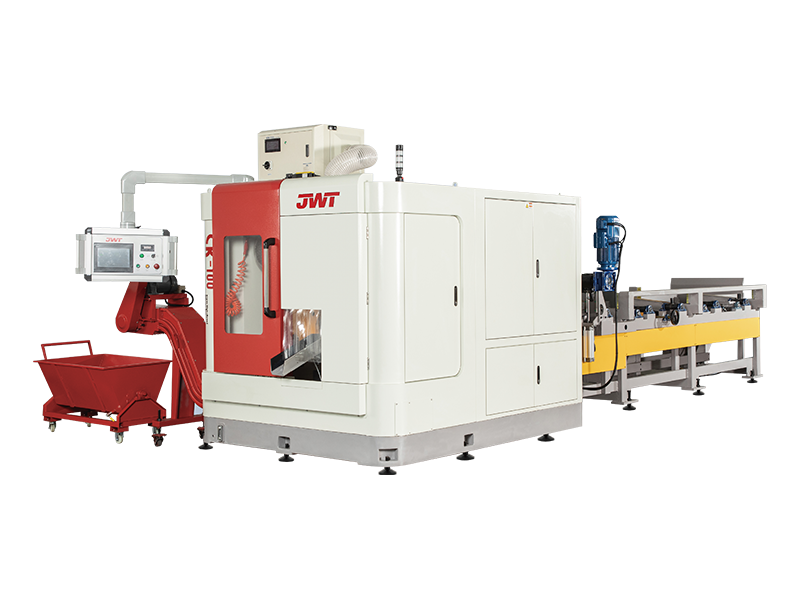
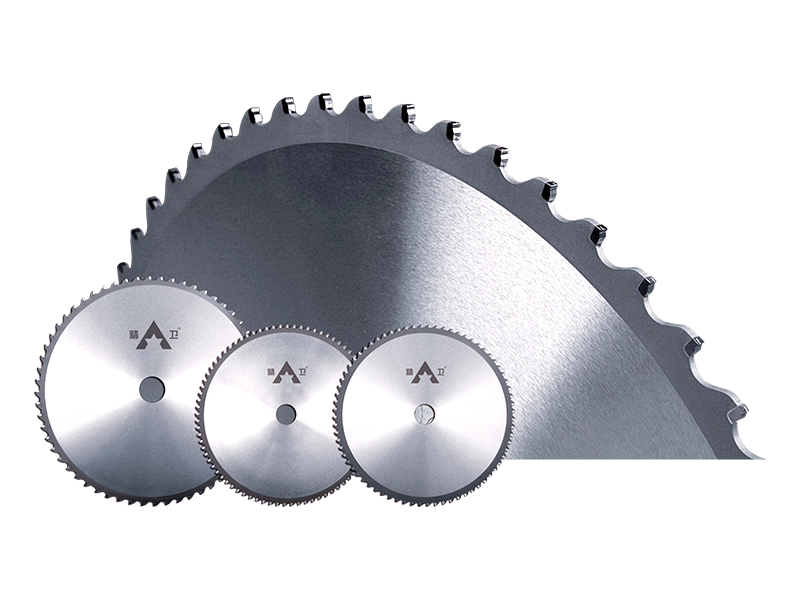
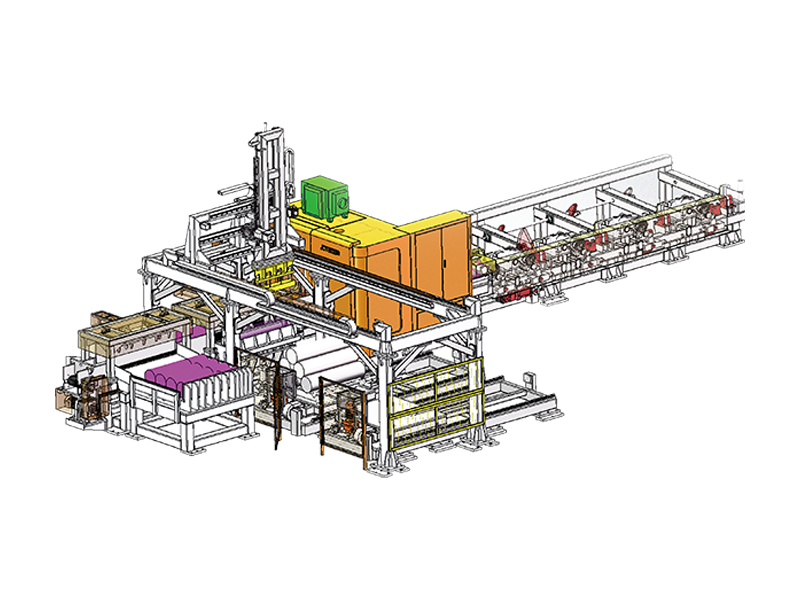
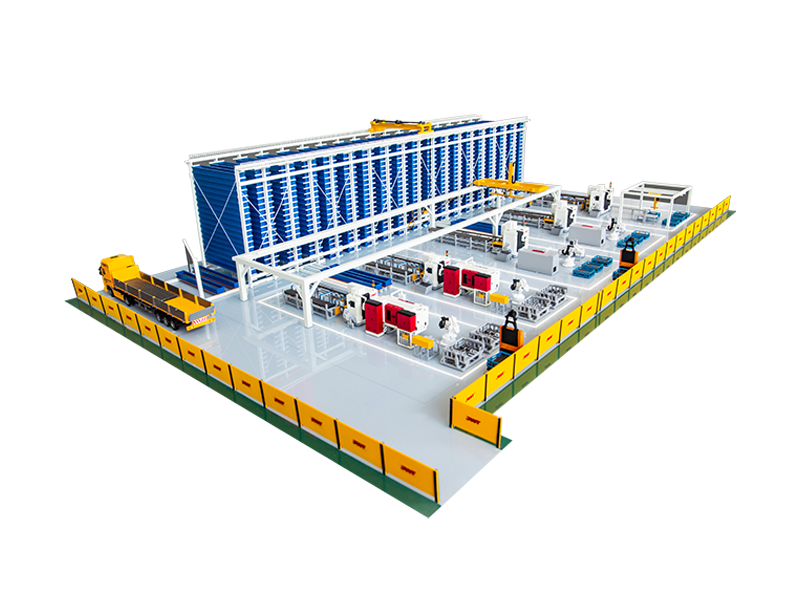

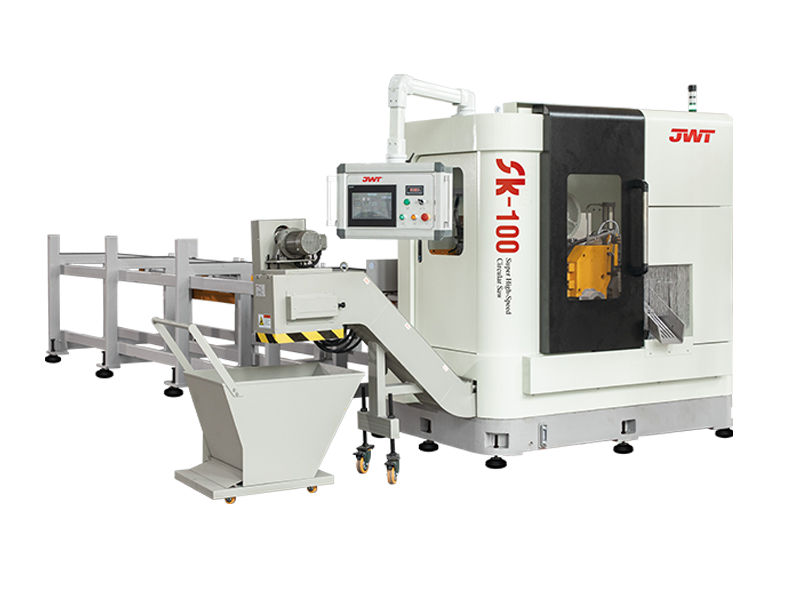

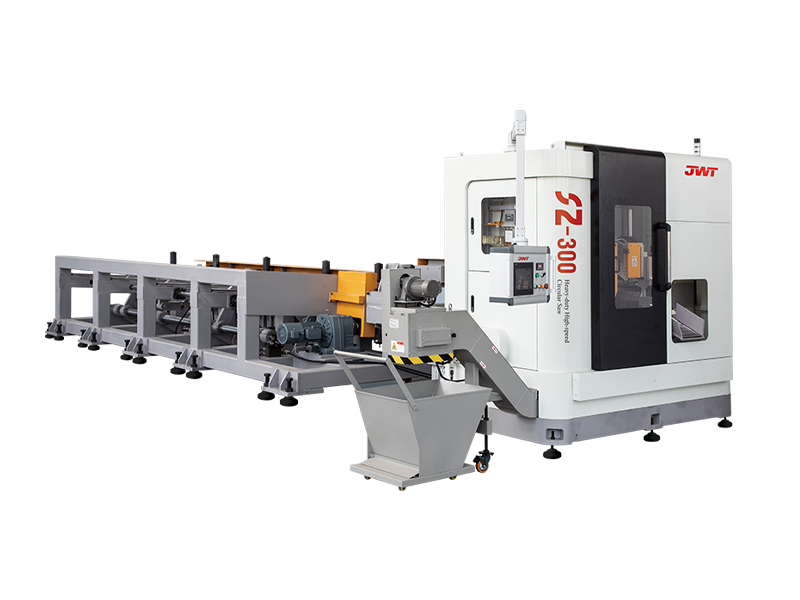
If you are interested in our Circular Saw Machine or production line, please consult us
CONTACT DETAILS
Zhejiang Jingweite Machine Tool Co.,Ltd.
- No.661 Jiyi Road, Wanghai Hi-tech Industrial Park, Haiyan, Jiaxing City, Zhejiang Province
- TEL:+86-0573-86035661
- E-Mail: [email protected]
Products
Quick link
Mobile terminal
