

 中文简体
中文简体 русский
Metal Circular Saw Machine: Types, Blades & Buying Guide
 2026.06.01
 Industry News
Not every cutting tool is built for metal — but a metal circular saw machine is. Whether you're slicing through mild steel bar stock, aluminum extrusions, or stainless steel tubing, this class of saw is specifically engineered to handle the hardness, heat, and precision demands that wood-cutting saws simply can't meet. This guide breaks down everything you need to know: how these machines work, the different types available, what specs actually matter, and how to choose the right one for your application.
Content
- 1 What Makes a Metal Circular Saw Machine Different
- 2 Types of Metal Circular Saw Machines
- 3 Metal Types Each Machine Handles Best
- 4 Key Specs to Evaluate Before You Buy
- 5 Cold Saw vs. Abrasive Cut-Off Saw: Which Is Right for You?
- 6 Blade Selection: HSS vs. TCT vs. Solid Carbide
- 7 Safety Practices for Metal Circular Saw Operation
- 8 Maintenance Tips to Extend Machine and Blade Life
What Makes a Metal Circular Saw Machine Different
A standard circular saw spins a blade fast and relies on abrasion or sharp teeth to tear through material. A metal circular saw machine takes a more controlled approach — it uses a toothed blade (typically HSS or carbide-tipped) spinning at a much lower RPM to shear through metal like a milling cutter rather than grinding through it. This is why metal-cutting circular saws are often called cold saws: the cutting process generates minimal heat, so chips carry heat away from the workpiece and the cut surface stays cool to the touch.
The difference shows up immediately in the results. Cuts are clean, burr-free, and dimensionally accurate — often ready for immediate use without secondary deburring or facing. Abrasive cut-off machines, by contrast, generate sparks and heat that can alter the metallurgical properties of the cut edge, require more cleanup, and wear through discs quickly.
Key characteristics that define a metal circular saw:
- Low blade speed (typically 20–100 RPM for cold saws vs. 3,500+ RPM for wood saws)
- Coolant or cutting fluid delivery to extend blade life and manage heat
- Rigid, vibration-dampened frame for consistent cut quality
- Toothed blades made from HSS, solid carbide, or TCT (tungsten carbide-tipped)
- Vise clamping system to hold workpieces securely during cutting
Types of Metal Circular Saw Machines
The term "metal circular saw" covers a wide range of machines — from handheld job-site tools to large CNC production lines. Understanding which category fits your needs will save you from buying the wrong machine entirely.
Handheld Metal Circular Saws
These are portable tools designed for fieldwork and on-site fabrication. A handheld metal cutting circular saw typically runs on a corded motor (7–15 amps) or a cordless battery platform and uses a carbide-tipped or ferrous-metal blade. They cut mild steel plate up to about 5/16" thick, as well as angle iron, channel, pipe, and steel studs. Popular for electricians, plumbers, and steel framers who need to make fast, clean cuts without lugging a chop saw.
Cold Saw Machines (Bench/Floor Models)
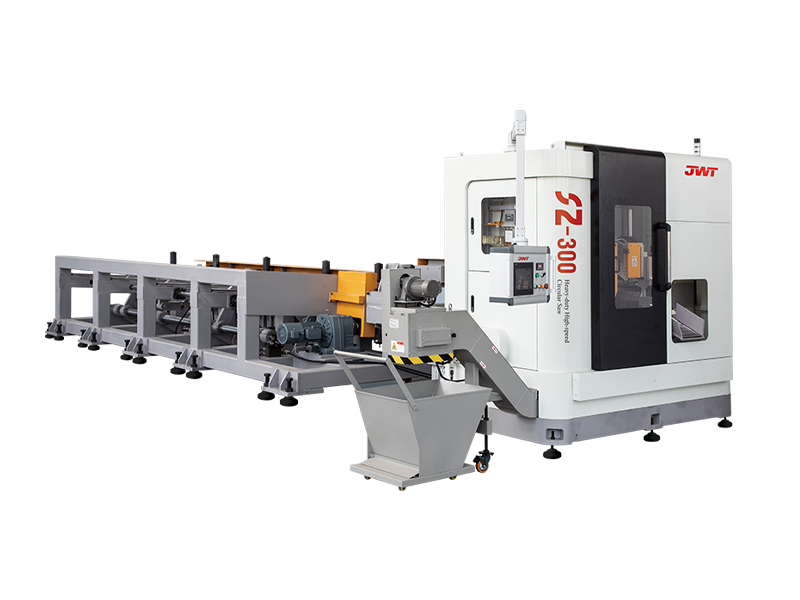
Cold saws are the workhorse of any metal fabrication shop. They sit on a bench or floor stand and use either a solid HSS blade or a TCT blade to make precision mitered cuts in bar stock, tubing, and structural profiles. Manual cold saws rely on the operator to feed the blade; semi-automatic models use hydraulic downfeed; fully automatic machines include a vise, downfeed, and material feed system controlled by CNC. Blade sizes range from 250 mm for compact manual units up to 350 mm and beyond for production machines.
High-Speed Circular Saws
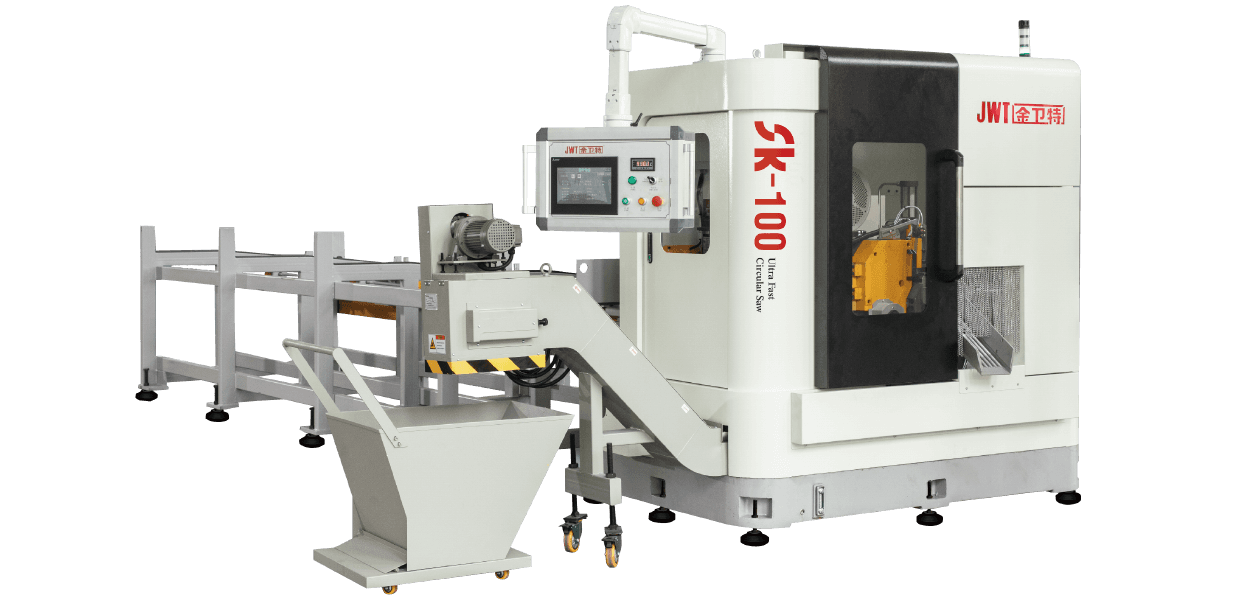
High-speed circular saw machines are designed for high-volume production environments where cycle time and repeatability matter most. These machines run at higher blade speeds (relative to cold saws) and are typically paired with solid carbide or carbide-insert blades optimized for specific materials like aluminum, copper, or non-ferrous alloys. They can cut dozens of parts per minute with tight length tolerances — often ±0.1 mm — making them ideal for extrusion fabricators, automotive suppliers, and tube mills.
Automatic CNC Metal Circular Saws
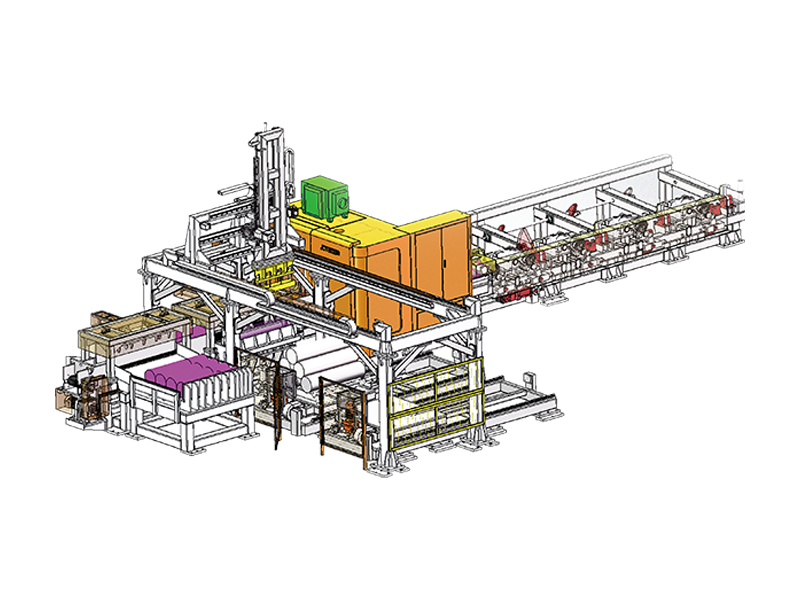
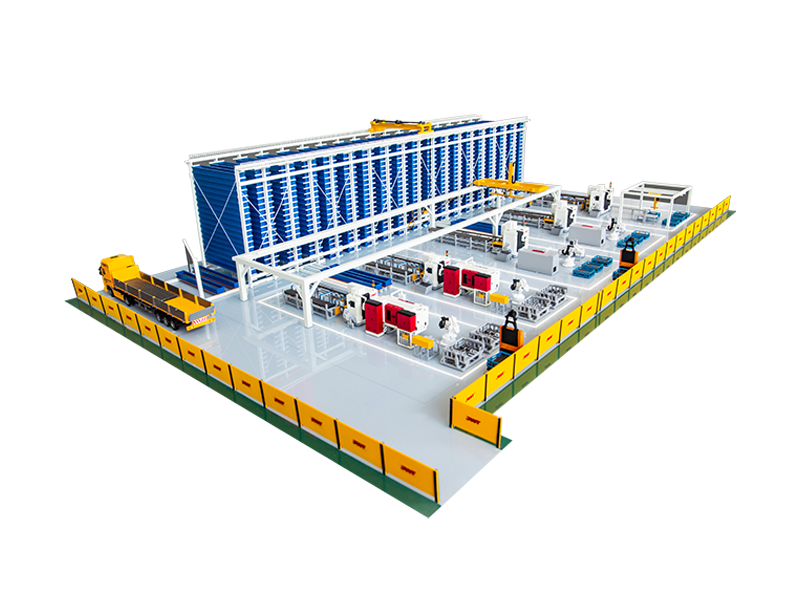
At the top end of the spectrum are fully automated CNC circular saw systems. These machines integrate bar feeders, length measurement systems, automatic vise clamping, and programmable cutting cycles. An operator loads raw stock, enters cut lengths and quantities into the control panel, and the machine handles the rest. Industrial models feature motors ranging from 15 HP to 25 HP, handle round material from 1" up to 6" or more in diameter, and produce finished parts with milled-quality surface finishes that require no secondary operations.
Metal Types Each Machine Handles Best
Not every metal circular saw machine cuts every metal equally well. Blade selection, RPM, and coolant strategy all vary depending on the workpiece material. The table below summarizes typical recommendations:
| Metal Type | Recommended Machine Type | Preferred Blade | Notes |
|---|---|---|---|
| Mild Steel | Cold saw / Handheld | HSS or TCT | Use coolant; medium RPM |
| Stainless Steel | Cold saw (semi/auto) | HSS fine-tooth | Low RPM; flood coolant essential |
| Aluminum | High-speed circular saw | TCT (high positive rake) | Higher RPM; mist or flood coolant |
| Copper / Brass | High-speed circular saw | Solid carbide or TCT | High RPM; manage chip clogging |
| Structural Steel (I-beams, channels) | Cold saw / Bandsaw combo | TCT large-diameter | Rigid clamping; slow feed rate |
| Titanium / Hardened Alloys | CNC cold saw | Solid carbide | Very low RPM; heavy coolant flow |
Key Specs to Evaluate Before You Buy
Walk through any manufacturer's spec sheet and you'll see dozens of numbers. Here are the ones that genuinely affect performance and suitability for your work:
Motor Power (HP or Amps)
Motor power determines how aggressively a machine can feed through material without bogging down or overloading. For light-duty manual cold saws cutting small profiles, a 1.5–3 HP motor is adequate. Semi-automatic shop machines typically need 3–7.5 HP. Production-grade automatic circular saw machines handling large-diameter solid bar start at 15 HP and go up to 25 HP or more. Undersized motors lead to premature blade wear and poor cut quality.
Cutting Capacity
This is the maximum cross-section the machine can accommodate — usually expressed as a round diameter (e.g., 3" round), rectangular size (e.g., 4" × 6" rect), and square size. Pay attention to both the maximum capacity and the capacity at angles like 45° and 60°, which are typically smaller. A machine rated for 4" round straight may only handle 3" round at a 45° miter.
Blade Speed and Variability
Fixed-speed machines are simpler and less expensive but limit you to one material type. Variable-speed or multi-speed machines let you dial in the right RPM for different metals — slower for steel and stainless, faster for aluminum and non-ferrous. If your shop cuts a variety of materials, variable speed is worth the investment.
Blade Size and Compatibility
Blade diameter directly affects cutting capacity and determines what replacement blades cost. Common cold saw blade sizes are 250 mm, 315 mm, and 350 mm. Larger blades are more expensive (especially carbide-tipped), so knowing your actual cutting needs upfront helps you avoid paying for capacity you won't use.
Miter Range
Most cold saws offer at least ±45° miter capability. Some models go to ±60° or include compound angle settings. If you're cutting frame components, trim, or anything requiring compound miters, verify the miter range covers your angles before purchasing.
Control System
Manual machines rely on operator skill for consistent results. Semi-automatic models add hydraulic or pneumatic downfeed and automatic vise clamping, reducing operator fatigue and variability. CNC automatic machines with touchscreen controls allow you to store cutting programs, set batch quantities, and integrate with upstream bar feeders — essential for production environments where running the same cut thousands of times is routine.
Cold Saw vs. Abrasive Cut-Off Saw: Which Is Right for You?
The most common comparison buyers face is between a cold saw machine and an abrasive cut-off (chop saw). The decision usually comes down to volume, budget, and cut quality requirements.
- Cut quality: Cold saws produce clean, burr-minimal cuts with a milled-quality finish. Abrasive saws leave rough, hardened edges with visible burr that require grinding or filing.
- Heat generation: Cold saws transfer heat into chips, keeping the workpiece cool. Abrasive saws generate significant heat that can discolor, harden, or warp the cut edge — a problem in precision fabrication.
- Blade cost and life: Cold saw blades cost more upfront (a quality HSS blade runs $100–$500+; TCT blades cost more) but last much longer — thousands of cuts versus hundreds of abrasive discs. Total cost per cut favors cold saws in medium-to-high volume.
- Noise and sparks: Abrasive cut-off saws are loud and throw sparks aggressively, requiring significant PPE and a safe work area. Cold saws are quieter and produce chips rather than sparks.
- Initial cost: Abrasive chop saws are inexpensive — basic models start under $200. A quality manual cold saw starts around $1,000–$3,000. Automatic CNC machines run $20,000 and up.
For occasional cuts, light fabrication, or emergency field work, an abrasive saw gets the job done fast and cheap. For any shop doing repetitive cuts, working with precision parts, or producing components that go directly into assemblies, a cold saw or metal circular saw machine pays for itself quickly through reduced secondary operations and improved part quality.
Blade Selection: HSS vs. TCT vs. Solid Carbide
The blade is the heart of any metal circular saw. Choosing the wrong blade for your material means poor cuts, short blade life, and potential safety hazards. Three main blade types dominate the market:
High-Speed Steel (HSS) Blades
HSS blades are the standard for cold saws cutting ferrous metals — carbon steel, alloy steel, and stainless. They're solid steel discs with precision-ground teeth and are resharpened rather than replaced when dull, making them cost-effective over time. Tooth geometry varies: fewer teeth (coarser pitch) for thicker solid sections; more teeth (finer pitch) for thin-wall tubing and profiles where tooth breakout is a concern.
Tungsten Carbide-Tipped (TCT) Blades
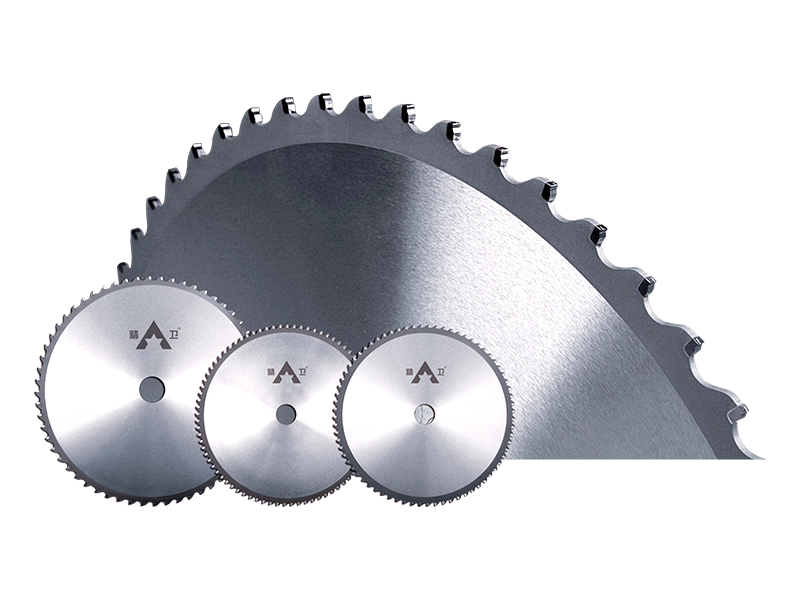
TCT blades feature carbide inserts brazed onto a steel body. They run faster than HSS blades and excel on non-ferrous metals like aluminum, brass, copper, and plastics. TCT blades are also used on ferrous metals in high-production environments where speed and blade life matter more than initial cost. They can be re-tipped when the carbide wears, extending their service life significantly.
Solid Carbide Blades
Solid carbide blades are the premium choice for high-speed cutting of aluminum, copper alloys, and other non-ferrous materials. They hold their edge longer than TCT at high RPM but are brittle — poor setup, vibration, or interrupted cuts can cause chipping or catastrophic blade failure. Reserved for well-maintained production machines where operating conditions are tightly controlled.
Safety Practices for Metal Circular Saw Operation
Metal cutting generates chips, not sawdust — but those chips are sharp, hot, and fast-moving. Following proper safety procedures protects both the operator and the machine.
- Always wear safety glasses or a full face shield; metal chips travel far and fast
- Use cut-resistant gloves when handling cut parts and clearing chips — never reach into the cut zone while the blade is spinning
- Secure the workpiece in the vise completely before starting the cut; never attempt freehand cuts on a cold saw
- Inspect the blade before each use for cracked teeth, missing carbide inserts, or visible damage — a damaged blade is a safety hazard
- Keep coolant systems clean and functional; dry cutting on machines designed for coolant dramatically shortens blade life and overheats the workpiece
- Allow the blade to reach full speed before engaging the material; never force or wedge the saw into a cut
- Dispose of chips properly — metal swarf is sharp and can cause injuries during cleanup
Most modern metal circular saw machines include blade guards, emergency stop buttons, and overload protection built into the motor circuit. These are not optional features — verify they're in working order before operating any machine, new or used.
Maintenance Tips to Extend Machine and Blade Life
A metal cutting circular saw machine is a precision tool. Proper maintenance keeps it cutting accurately and extends the life of both the blade and the machine itself.
Daily Maintenance
Clear chips from the vise area, chip tray, and blade guard at the end of every shift. Check coolant level and condition — contaminated or depleted coolant accelerates blade wear and can cause workpiece discoloration. Inspect the blade visually for chipped or broken teeth before starting any new job.
Weekly and Monthly Checks
Inspect and tighten the vise clamping mechanism. Check the blade arbor for runout using a dial indicator — excessive runout causes uneven blade wear and poor cut quality. Lubricate pivot points, downfeed mechanisms, and guide rails per the manufacturer's schedule. On CNC machines, verify that reference positions and stop positions are still accurate.
Blade Resharpening
HSS cold saw blades should be resharpened — not discarded — when dull. A properly sharpened blade cuts as well as a new one. Most industrial saw service centers offer resharpening for $30–$80 per blade, far cheaper than replacement. Track how many cuts a blade makes before it needs sharpening; if that number drops sharply, it's a sign of the wrong speed, feed, or coolant flow, not just a worn blade.
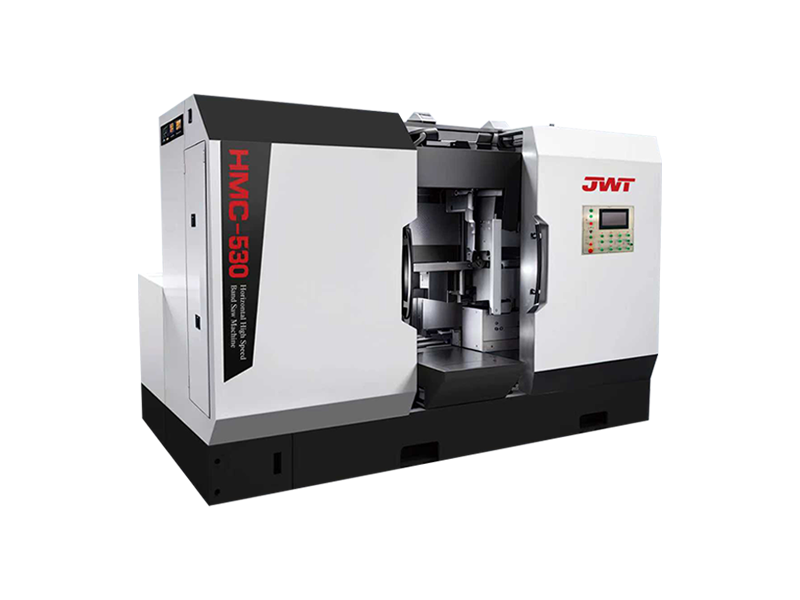
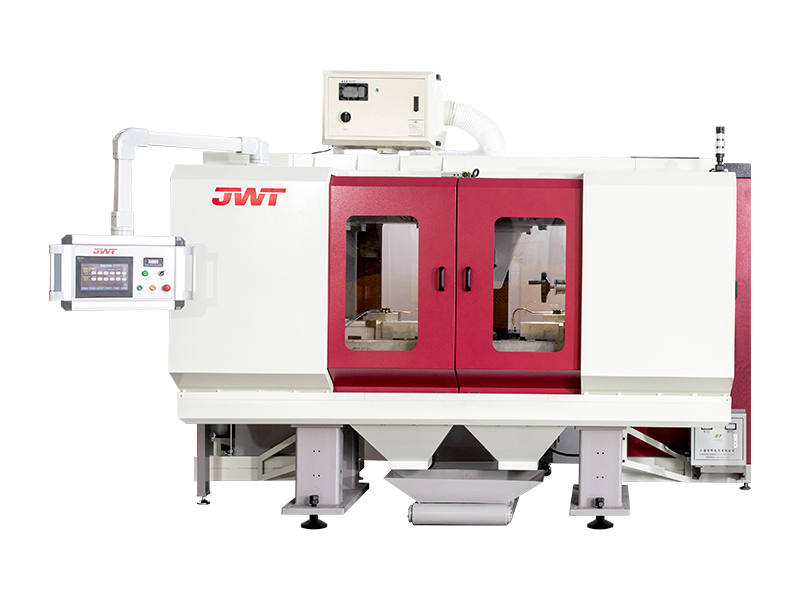
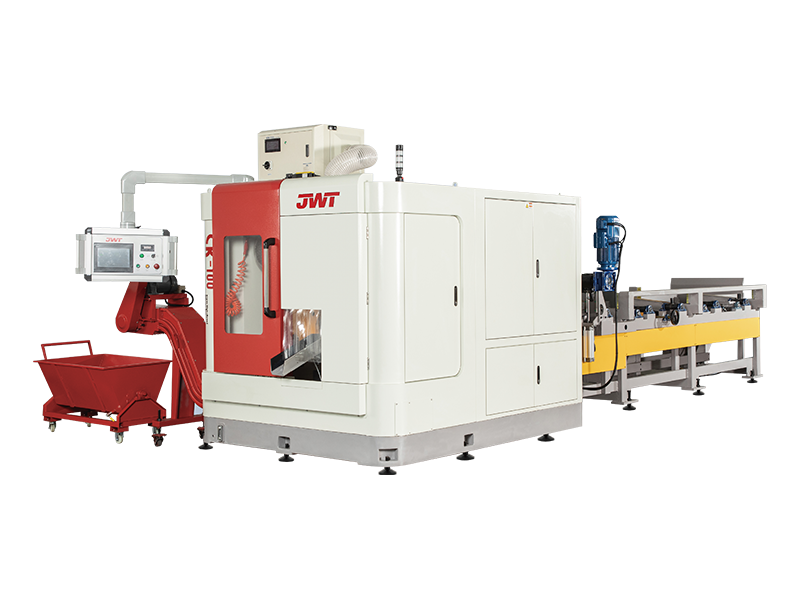
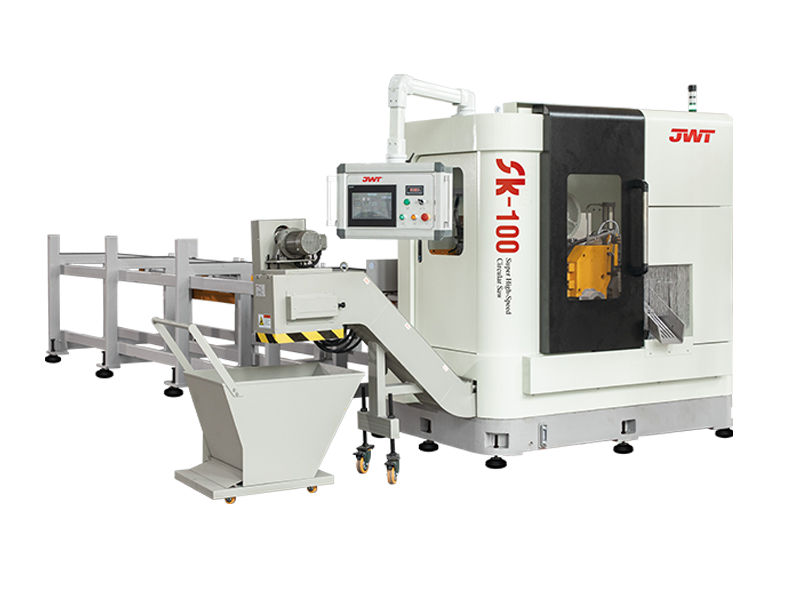

If you are interested in our Circular Saw Machine or production line, please consult us
CONTACT DETAILS
Zhejiang Jingweite Machine Tool Co.,Ltd.
- No.661 Jiyi Road, Wanghai Hi-tech Industrial Park, Haiyan, Jiaxing City, Zhejiang Province
- TEL:+86-0573-86035661
- E-Mail: [email protected]
Products
Quick link
Mobile terminal
