

 中文简体
中文简体 русский
Heavy Duty Saw Machine: How to Pick the Right One and Actually Get the Most Out of It
 2026.06.16
 Industry News
Content
- 1 What Makes a Saw Machine "Heavy Duty" in the First Place?
- 2 The Main Types of Heavy Duty Saw Machines and What Each One Is For
- 3 Critical Specs to Evaluate Before Buying a Heavy Duty Saw Machine
- 4 Heavy Duty Saw Machine for Metal vs. Wood: Key Differences You Can't Ignore
- 5 How to Match a Heavy Duty Saw Machine to Your Production Volume
- 6 Blade Selection: The Part Most Buyers Underestimate
- 7 Safety Practices That Apply to Every Heavy Duty Saw Machine
- 8 Maintenance Schedule That Keeps Your Industrial Saw Running Long-Term
- 9 What to Look for When Comparing Heavy Duty Saw Machine Suppliers
- 10 Quick Comparison: Which Heavy Duty Saw Machine Type Is Right for Your Job?
What Makes a Saw Machine "Heavy Duty" in the First Place?
The term "heavy duty saw machine" gets thrown around loosely in product listings and catalogs, but in practical terms, it refers to a machine built to handle sustained, high-volume cutting operations without overheating, flexing, or breaking down. A heavy duty saw isn't just a bigger version of a consumer-grade model — it's an entirely different category of equipment designed around industrial tolerances, continuous-use duty cycles, and materials that would destroy a standard saw within minutes.
In concrete terms, a genuine heavy duty cutting machine typically features a motor rated at 3 HP or higher (often ranging from 5 HP to 30+ HP for large industrial models), a cast-iron or steel-welded frame that resists vibration and flex under load, precision-ground cutting components, and a cooling system — either air or liquid — to manage heat during prolonged operation. The feed mechanism is also typically motorized or hydraulic rather than manual, allowing consistent material advance without operator fatigue. These machines are built for factories, fabrication shops, sawmills, construction yards, and any environment where a saw needs to cut hard, heavy, or thick materials repeatedly, all day, every day.
The Main Types of Heavy Duty Saw Machines and What Each One Is For
Heavy duty industrial saw machines come in several distinct configurations, each optimized for specific materials and cutting tasks. Choosing the wrong type is one of the most expensive mistakes a buyer can make — not just in terms of upfront cost but in wasted time, poor cut quality, and accelerated blade wear. Here's a breakdown of the most common types:
Heavy Duty Band Saw Machine
A heavy duty band saw machine uses a continuous looped blade stretched between two or more wheels to make long, smooth cuts. It excels at cutting curves, irregular shapes, and large cross-sections of wood, metal, or plastic. Vertical band saws are used for detailed cuts and contour work, while horizontal band saws are the workhorse of metal fabrication shops — they clamp the workpiece and let the saw head descend under gravity or hydraulic pressure, cutting through steel bars, pipes, I-beams, and billets automatically. Industrial horizontal band saws can handle bar stock up to 400 mm in diameter and are often equipped with variable speed controls to optimize blade speed for different materials.
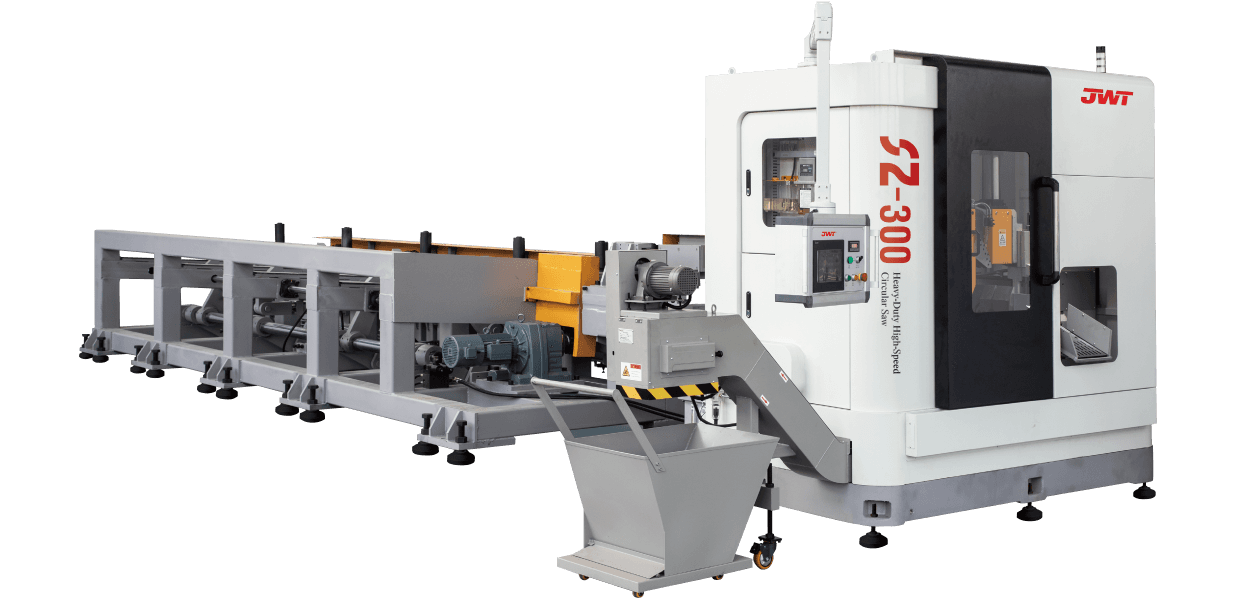
Heavy Duty Circular Saw Machine
The heavy duty circular saw machine uses a toothed or abrasive rotating disc to make straight cuts through wood, metal, concrete, or composite materials. In industrial settings, these machines are typically mounted on a fixed table (as panel saws or cold saws) rather than handheld. Cold circular saws for metal cutting operate at low RPM with a high-tooth-count blade, producing clean, burr-free cuts without heat distortion — critical for precision metalwork. Panel saws and beam saws for wood processing use large-diameter blades (up to 600 mm or more) to rip through sheet goods and solid timber at high speed. These are the go-to machines in furniture factories, timber mills, and metal service centers.
Heavy Duty Chop Saw / Miter Saw Machine
Industrial chop saws and miter saws make crosscuts and angled cuts on profiles, pipes, and structural sections. A heavy duty version differs from the consumer model in its motor power (typically 3–7.5 HP), the size and material of its blade (abrasive disc or carbide-tipped), and its ability to clamp and cut hard materials like steel angle iron, aluminum extrusions, and stainless steel tubing. Many heavy duty miter saws for industrial use feature a sliding head for wider crosscuts and a vice clamping system for hands-free operation — a critical safety feature when cutting metal.
Heavy Duty Wood Cutting Machine (Log Saw / Rip Saw)
For timber processing, the heavy duty wood cutting machine category includes log saws, rip saws, and gang saws. A heavy duty log saw can handle raw timber sections up to 1 meter or more in diameter, breaking them down into boards or beams. Rip saws are designed for cutting along the grain of long timber planks at high throughput, while gang saws use multiple parallel blades in a single pass to cut a log into multiple boards simultaneously — a technique used in high-volume sawmills. These machines run on three-phase power supplies and often integrate with automated log handling and outfeed conveyor systems.
Heavy Duty Stone and Concrete Saw Machine
Cutting stone, concrete, brick, or tile requires a specialized heavy duty cutting machine equipped with diamond or abrasive blades and a water-cooling system to prevent blade overheating and suppress dust. Bridge saws and gantry saws are the standard equipment in stone fabrication shops, capable of cutting marble, granite, and engineered stone slabs up to several meters long with millimeter precision. These machines can cost anywhere from $10,000 to over $100,000 depending on automation level and cutting envelope.
Critical Specs to Evaluate Before Buying a Heavy Duty Saw Machine
Walking into a purchase decision without understanding the specs is how businesses end up with an industrial saw machine that underperforms, breaks down prematurely, or simply can't handle the material they're working with. Here are the specifications that matter most:
| Specification | Why It Matters | What to Look For |
| Motor Power (HP / kW) | Determines cutting capacity and ability to sustain load without overheating | Match motor power to material density and thickness; 3–5 HP for medium duty, 7.5+ HP for heavy industrial |
| Cutting Capacity (mm / inch) | Maximum cross-section the machine can cut in a single pass | Always buy with 20–30% headroom above your current largest workpiece |
| Blade Speed (m/min or RPM) | Controls cut quality and heat generation; too fast damages hard materials | Variable speed is essential for machines cutting multiple material types |
| Duty Cycle | How long the machine can run continuously before needing a rest period | Industrial machines should be rated for 100% duty cycle (continuous operation) |
| Frame Construction | Determines rigidity, vibration resistance, and longevity under heavy load | Cast iron or heavy-gauge welded steel preferred over aluminum or sheet metal |
| Feed Mechanism | Affects cut consistency and operator fatigue during high-volume work | Hydraulic or servo-controlled feed provides the most consistent results |
| Coolant System | Manages blade and workpiece temperature; critical for metal and stone cutting | Look for integrated coolant pumps with adjustable flow for metal-cutting saws |
| Power Supply Requirements | Industrial saws typically require three-phase power | Confirm your facility has the correct voltage and amperage before purchasing |
Heavy Duty Saw Machine for Metal vs. Wood: Key Differences You Can't Ignore
One of the most common sourcing mistakes is assuming a heavy duty saw machine is material-agnostic. In reality, metal-cutting and wood-cutting saws differ fundamentally in blade design, speed, coolant requirements, and feed mechanics. Trying to cut metal with a wood saw — or vice versa — produces dangerous results: overheated blades, poor cut quality, workpiece damage, and potential blade failure.
Metal-Cutting Saws
Heavy duty metal cutting saws operate at much lower blade speeds than wood saws — a band saw for steel might run the blade at 30–100 m/min depending on the material hardness, compared to 500–1,000 m/min for wood. This is because metal generates far more heat per unit cut, and excessive speed leads to blade annealing (softening), rapid tooth wear, and workpiece burning. Metal-cutting band saws and cold saws also require a coolant system — typically a soluble oil and water mixture — that floods the blade and cut zone continuously. The clamping system on metal saws must also be far more robust, as round bar stock or pipe can rotate during cutting if not properly secured, with potentially dangerous consequences.
Wood-Cutting Saws
A heavy duty wood cutting machine runs blades at much higher speeds, relies on tooth geometry (hook angle, set, and kerf width) rather than coolant for cutting efficiency, and prioritizes dust extraction over coolant management. The feed systems for industrial wood saws are often pneumatically or hydraulically assisted but don't require the same level of force as metal saws since wood offers considerably less resistance. However, wood saws must contend with grain direction, knots, and moisture content — all of which affect cut quality and blade life in ways that have no equivalent in metal cutting.
How to Match a Heavy Duty Saw Machine to Your Production Volume
Buying the right industrial saw machine isn't just about matching specs to material — it's also about matching machine capacity to your actual production throughput. An undersized machine will become a bottleneck; an oversized one wastes capital and floor space. Here's how to think about it:
- Low volume / job shop use (1–20 cuts per hour): A semi-automatic heavy duty band saw or miter saw with manual material loading is typically sufficient. These machines cost less, require less floor space, and are easier to maintain with a small team.
- Medium volume (20–100 cuts per hour): Look for a fully automatic band saw or circular saw with a hydraulic vice, automatic feed, and auto-return head. These machines cut one piece, return to position, and accept the next workpiece with minimal operator involvement — dramatically increasing throughput without adding headcount.
- High volume / production line (100+ cuts per hour): You'll need a production-grade industrial saw machine integrated with infeed conveyors, magazine bar feeders, outfeed tables, and possibly a PLC-controlled length stop system. At this level, cycle time per cut — measured in seconds — becomes the critical metric, and machines are evaluated on cuts per shift rather than cuts per hour.
- Custom / large-section cutting: If you're regularly cutting sections larger than 300 mm in diameter or 500 mm in width, you'll need to move into specialty heavy duty machines with larger cutting envelopes, higher-powered motors, and reinforced clamping systems. These are often built to order and require a detailed technical specification before quoting.
Blade Selection: The Part Most Buyers Underestimate
Even the best heavy duty saw machine will underperform if paired with the wrong blade. Blade selection is arguably the most impactful variable in cut quality, blade life, and operating cost — yet it's frequently treated as an afterthought. Here's what determines the right blade for your application:
Tooth Pitch (TPI — Teeth Per Inch)
Lower TPI (2–4 teeth per inch) means larger gullets between teeth and is suited for cutting thick, soft materials where chip clearance is critical — like large timber sections or soft aluminum. Higher TPI (10–24+) is used for thin-walled tubing, sheet metal, and precision cuts where a fine finish matters. A critical rule: always have at least 3 teeth in contact with the workpiece at any point during the cut. Too few teeth and you get a grabbing, rough cut; too many and the gullets fill with chips, causing heat buildup and premature blade failure.
Blade Material and Coating
For metal cutting on a heavy duty band saw machine, bi-metal blades — with high-speed steel (HSS) teeth electron-beam welded to a flexible spring-steel backing — are the industry standard. They offer a strong balance of tooth hardness and blade flexibility. For harder materials like stainless steel, tool steel, or titanium alloys, carbide-tipped band saw blades provide significantly longer life at a higher upfront cost. Tungsten carbide circular saw blades dominate in cold saw applications for steel and aluminum. For stone and concrete, diamond-segment blades are non-negotiable.
Blade Tension and Tracking
On band saws, proper blade tension and tracking setup are as important as blade selection. An under-tensioned blade deflects under load, producing curved or tapered cuts. An over-tensioned blade stresses the wheel bearings and can cause premature blade cracking. Always follow the machine manufacturer's tension specifications for the specific blade width being used, and check tracking adjustment — the blade should run centered on the wheel crown — before each production run.
Safety Practices That Apply to Every Heavy Duty Saw Machine
Heavy duty saw machines are among the most hazardous equipment in any industrial facility. Blade contact injuries, kickback events, and flying debris incidents happen regularly in shops where safety procedures are not enforced consistently. These are non-negotiable practices regardless of saw type:
- Always use the work-holding device: Never hold the workpiece by hand while the saw is in motion. Every heavy duty industrial saw machine should have a clamp, vice, or fence — use it every time, without exception.
- Inspect blades before every shift: Check for missing teeth, cracks, warping, or unusual wear. A damaged blade on a heavy duty machine can fail catastrophically and at high speed. Replace blades at the first sign of damage, not after the next break.
- Keep blade guards in place: Guards exist because they work. Removing them to "make it easier to see the cut" is one of the leading causes of serious saw injuries. If your guards are obstructing visibility, address the lighting, not the guard.
- Wear appropriate PPE: Safety glasses, hearing protection, steel-toe footwear, and cut-resistant gloves are the minimum for most heavy duty saw operations. Face shields are recommended when cutting materials prone to chipping or shattering.
- Establish a safe zone: Mark a clear exclusion zone around the saw's operating envelope. Nobody except the operator should stand within the zone while the machine is running, and the operator should never stand directly in line with the cutting direction.
- Lock out / Tag out (LOTO) before maintenance: Any blade change, adjustment, or cleaning must be performed with the machine fully de-energized and locked out. This is an OSHA requirement in the US and an equivalent mandatory standard in most other industrial jurisdictions.
Maintenance Schedule That Keeps Your Industrial Saw Running Long-Term
A heavy duty saw machine is a significant capital investment — often tens of thousands of dollars. A proactive maintenance schedule dramatically extends service life, reduces unplanned downtime, and keeps cut quality consistent. Here's a practical schedule broken down by frequency:
Daily Checks
- Inspect blade for damage, tooth wear, and proper tension/tracking
- Check coolant level and concentration (for metal cutting saws)
- Clear chip trays, sawdust collection bins, and coolant filters
- Verify all guards are in position and functioning
- Test the emergency stop (E-stop) function
Weekly Checks
- Lubricate all grease nipples and sliding surfaces per the manufacturer's lubrication chart
- Check blade guide bearings or guide blocks for wear
- Inspect hydraulic lines and fittings for leaks (on hydraulic-feed machines)
- Verify fence and stop accuracy with a test cut and measurement
Monthly and Annual Service
- Replace coolant fluid completely (contaminated coolant causes corrosion and promotes bacterial growth)
- Inspect and re-tension V-belts or drive chains
- Check wheel alignment and tire condition on band saws
- Have the electrical panel inspected by a qualified technician annually
- Review and log all maintenance activities for warranty compliance and resale documentation
What to Look for When Comparing Heavy Duty Saw Machine Suppliers
The market for heavy duty commercial saw machines spans a wide range of quality tiers — from premium European and Japanese manufacturers to budget-friendly Asian suppliers, with a large middle ground of reputable mid-range brands. Here's how to evaluate suppliers intelligently rather than defaulting to lowest price:
- Spare parts availability: A heavy duty machine is only as good as its maintenance support. Before buying, confirm that blades, bearings, guide blocks, belts, and hydraulic seals are available locally or with short lead times. Machines from obscure brands sometimes become maintenance nightmares when a key part has a 12-week lead time from overseas.
- After-sales service and warranty: Industrial saw machines should carry at least a 12-month warranty on parts and labor. More importantly, confirm the supplier has trained technicians who can come on-site to diagnose and repair problems — remote troubleshooting via email is not acceptable for production-critical equipment.
- Machine certifications: Look for CE marking (for European markets), UL or CSA listing (for North American markets), or equivalent safety certifications. These aren't just paperwork — they indicate the machine has been tested to specific safety standards.
- Test cuts before purchase: For any machine above $5,000, insist on a factory test cut using your actual material or a representative sample. This is standard practice in industrial equipment procurement and any legitimate supplier will accommodate it.
- Reference customers: Ask the supplier for references from current customers in the same industry, running the same material type. A five-minute phone conversation with an existing user will tell you more than any product brochure.
Quick Comparison: Which Heavy Duty Saw Machine Type Is Right for Your Job?
| Saw Type | Best For | Not Ideal For | Typical Power Range |
| Horizontal Band Saw | Bar stock, solid metal sections, pipes | Sheet goods, large panels | 2–15 HP |
| Vertical Band Saw | Curved cuts, irregular shapes, wood and metal | High-volume straight crosscuts | 1.5–7.5 HP |
| Cold Circular Saw | Precision metal crosscuts, clean finish | Very thick sections, curves | 3–10 HP |
| Panel / Beam Saw | Sheet goods, panels, furniture production | Solid bar stock, metal | 5–20 HP |
| Log / Rip Saw | Timber milling, large-section wood cutting | Metal, stone, finished goods | 10–50+ HP |
| Bridge / Gantry Saw | Stone, marble, granite slab cutting | Wood, metal, flexible workpieces | 5–30 HP |
| Heavy Duty Miter Saw | Angle cuts, structural profiles, trim work | Ripping long boards, very thick material | 3–7.5 HP |
Use this table as a starting framework, but always validate against your specific material, thickness, volume, and finish requirements before finalizing your selection. When in doubt, contact the manufacturer directly with a detailed specification sheet — any reputable heavy duty saw machine supplier will be happy to recommend the right model rather than let you buy the wrong one.
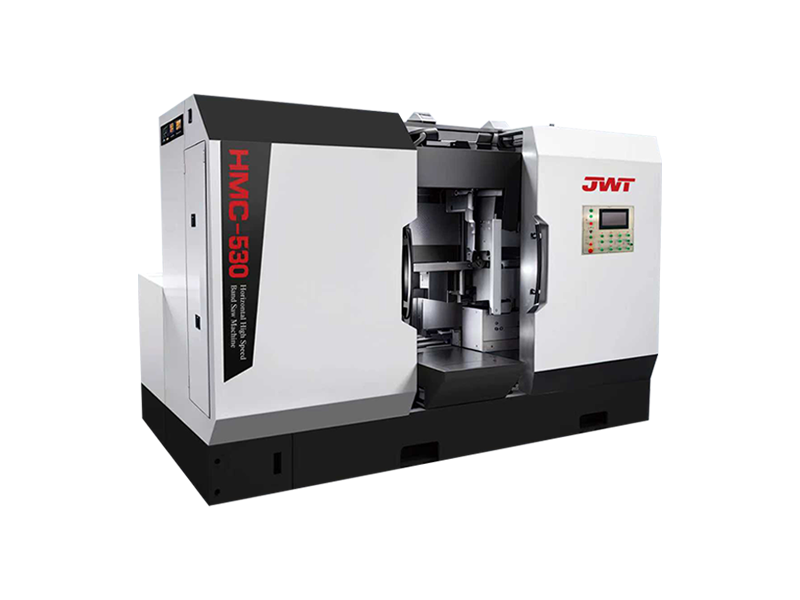
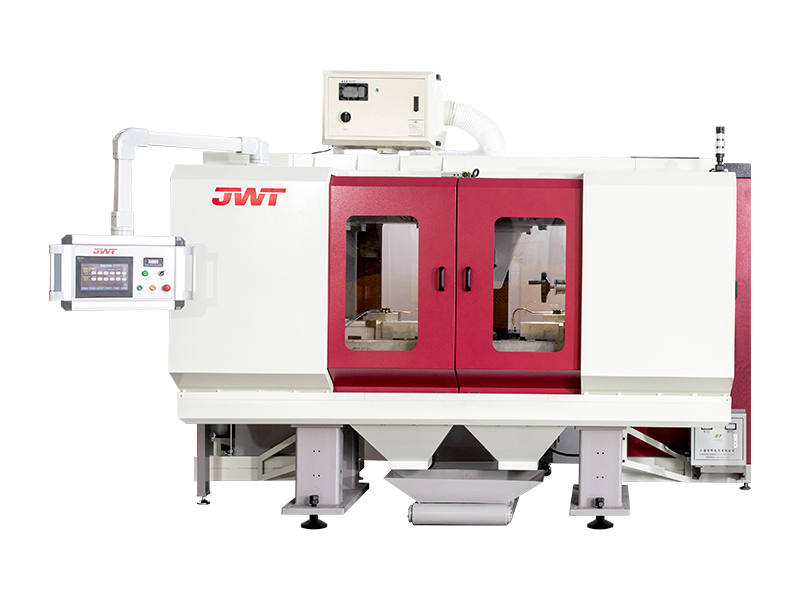
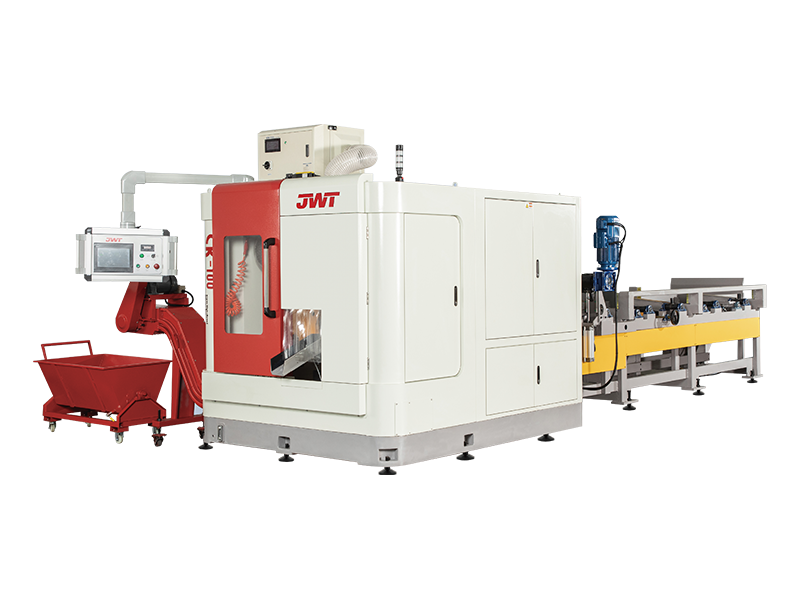
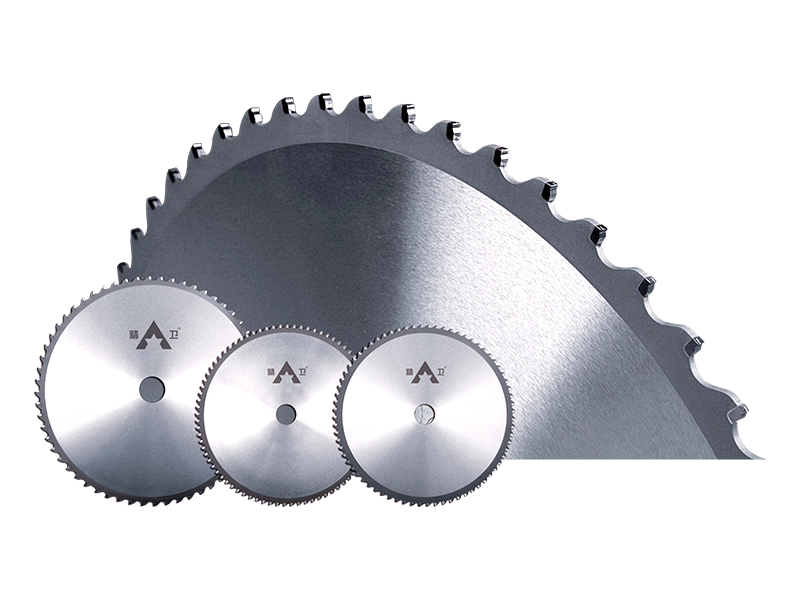
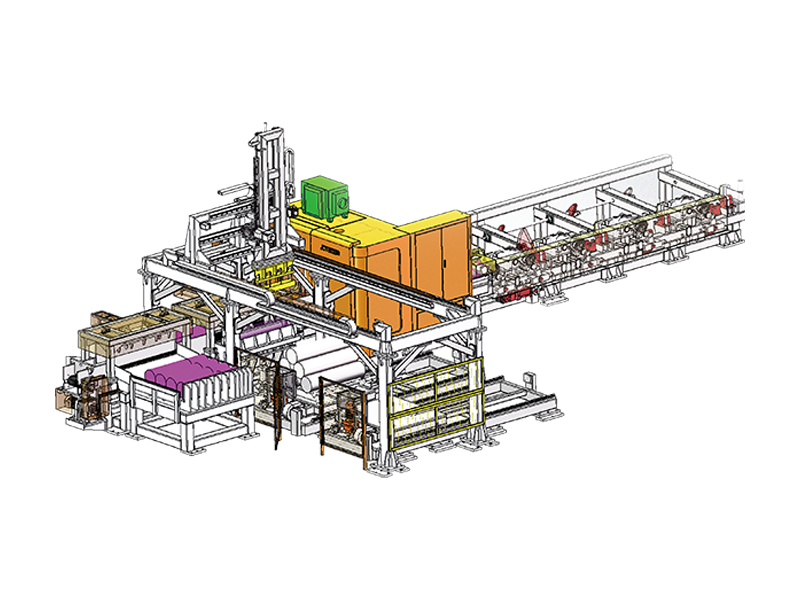
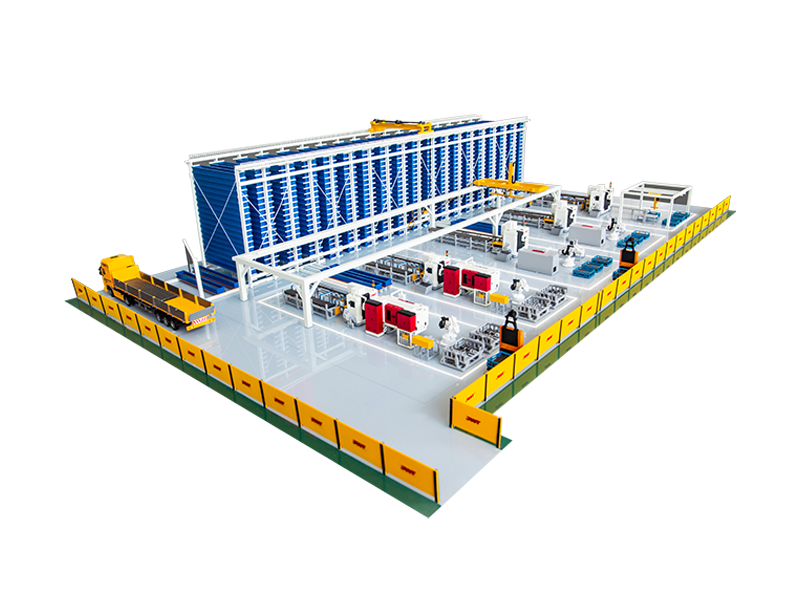
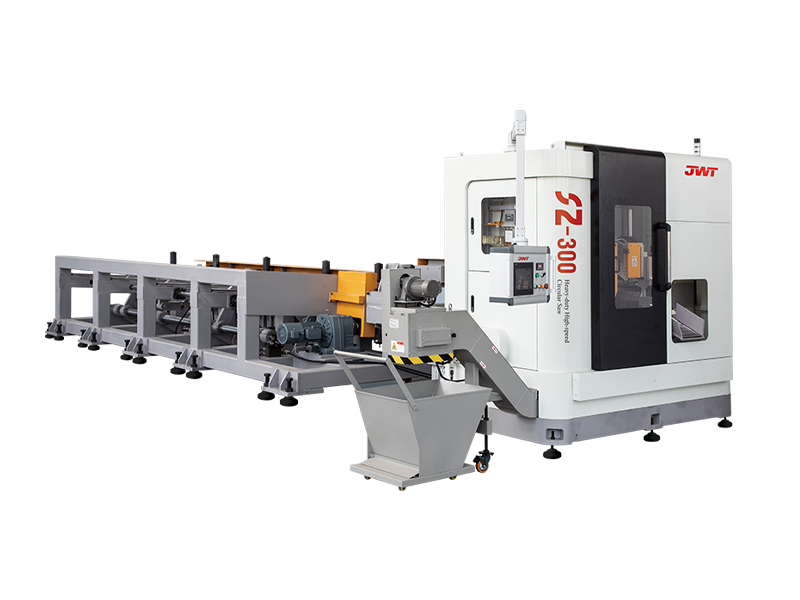
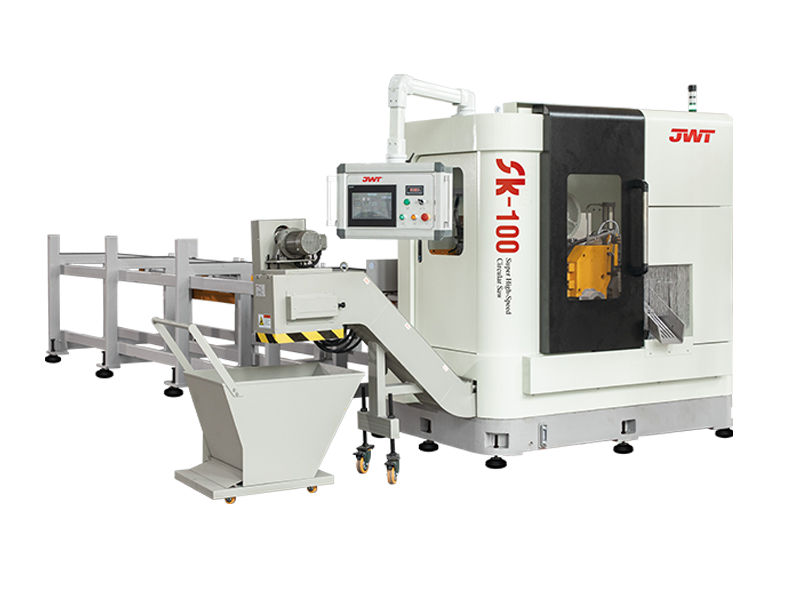

If you are interested in our Circular Saw Machine or production line, please consult us
CONTACT DETAILS
Zhejiang Jingweite Machine Tool Co.,Ltd.
- No.661 Jiyi Road, Wanghai Hi-tech Industrial Park, Haiyan, Jiaxing City, Zhejiang Province
- TEL:+86-0573-86035661
- E-Mail: [email protected]
Products
Quick link
Mobile terminal
